This is a repost from the JFrog dev.io blog site. When you’re new to an industry, you encounter a lot of new concepts. This can make it really difficult to get your feet underneath you on an unfamiliar landscape, especially for junior engineers. In this series, I’ll cover tools and terminology common to the DevOps space, plus the occasional newbie-friendly tutorial for emerging or established technologies. If you have a request or suggestion, let me know!
Many organizations are prioritizing the health and well being of their workforce in the wake of the current global pandemic. Many threat actors are also taking advantage of this opportunity. I’ve seen recent examples of social engineering—with calculated phishing campaigns preying on those who seek information on the COVID-19. As noted by Security Researcher Brian Krebs, one hacker group even used a copy of a legitimate map of the impact of the virus to infect machines with malware.
As federal, state, and local government agencies scramble to create emergency response processes and procedures, be advised that IT service management (ITSM) can play a critical role in supporting emergency response plans and associated processes. Government and commercial business emergency response plans define how agencies and commercial organizations respond to catastrophic events in the environment.
A Network Operations Center (NOC) is a location from which IT support technicians can supervise, monitor, and maintain client networks and infrastructure. Because they act as a central nervous system for many organizations, NOCs are typically located in a central physical location. The global coronavirus (COVID-19) pandemic is an unprecedented situation that is creating new challenges for everyone—and that includes NOCs.
A few months ago, Honeycomb released our SLO — Service Level Objective — feature to the world. We’ve written before about how to use it and some of the use scenarios. Today, I’d like to say a little more about how the feature has evolved, and what we did in the process of creating it. (Some of these notes are based on my talk, “Pitfalls in Measuring SLOs;” you can find the slides to that talk here, or view the video on our Honeycomb Talks page).
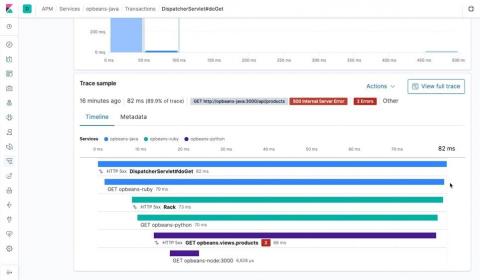
Distributed tracing remains one of the most important features of any tracing system. Nearly a year ago, we announced Elastic APM distributed tracing, let’s take a look at how this useful feature works behind the scenes. Over the past few years, many applications have adopted microservice architecture. Each of the services in a microservice architecture can have their own instrumentation to provide observability into the service.
A lot of businesses are thinking about the future of virtual work and how to make it successful in light of recent world events. For managers and employees used to working in a traditional office space, moving to remote work can be a challenge on many fronts. How do I and my team stay motivated and productive? What’s the best setup for a home office? Most importantly, how do I separate office work from the duties I normally perform around the home?
Security teams must protect attack surfaces that are becoming bigger and more distributed due to the growth of remote work, cloud infrastructure, and other dynamics. These teams understand that meeting this challenge at scale requires the successful incorporation of the appropriate technology into their security operations program.
Being a UI developer, I’ve learned one thing: It doesn’t matter how carefully you write your code. Suppose you’ve double-checked that you defined and called all functions the right way or followed all the best practices. Even then you’ll see that a tiny variable can sneak behind and create an error. Now, suppose you find out that for some unknown reason a form validation or submit button isn’t working.