The latest News and Information on IT Networks and related technologies.
In today’s digital world, a business’ success is inextricably tied to its ability to meet customer demands and rising expectations for quality, performance, responsiveness, and innovation. Digital transformation is no longer an optional add-on to help an organization stand out in a saturated market. It is a necessity for businesses hoping to keep up with fierce competition.
While SaaS has made digital transformation a cakewalk, the virtual private network (VPN) takes credit when it comes to remote work. A lot of enterprises, as well as small and medium-sized businesses, continue their seamless operations remotely and securely through their VPN. VPNs enable private networks to communicate with the compute resources of public and shared networks.
By now, we’re all fairly aware that the ongoing crisis has changed the way people work. Businesses around the globe have adopted the remote working model. Many jobs today are compatible with remote working, with business-critical applications readily accessible through the internet. However, not all applications deployed in an organization are available through the internet. Some of them are available only on the business’ LAN due to security concerns.
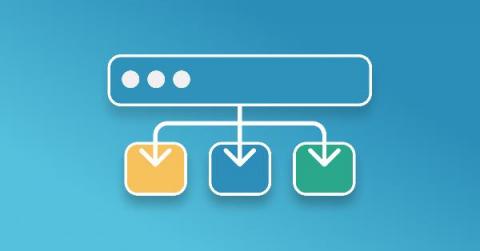
Consider for a moment which fundamental pieces of technology enable the modern web. Odds are, you’re thinking about things like Javascript and HTTP—and yes, they are fundamental parts of the modern web. But, the often-overlooked component of this ecosystem that has truly enabled the web to scale to billions of users and transactions is load balancers.
If you thought the fishmonger’s hair net was the only kind of net you’re wrong. From Pandora FMS we will show you some more, so that you do not get lost without them. The term “network” is used in computing to name a set of computers connected to each other in such a way that they can share resources, services, and information. There are several ways to classify these networks, based on their scope, relationship, or connection method.
When it comes to IT Services, their whole world revolves around offering technology solutions with support and management. For these companies, it has become important now, more than ever, to modernize their workspaces and make the shift with IT digitization to effectively manage complexities like maintenance, security, scalability and resilience. While digital transformation may sound great in theory, in practice, it presents some unique concerns for businesses.
Nothing’s worse than getting a call from the users that the network is down. Too often, IT lacks the visibility they need to get before performance issues arise, meaning you’re in the dark until a user or customer calls to complain. Once an outage happens, the clock is ticking. And the more time you take to understand and resolve the issue, the more it costs you: in terms of customer dissatisfaction, and also staff time & lost productivity.