The latest News and Information on IT Networks and related technologies.
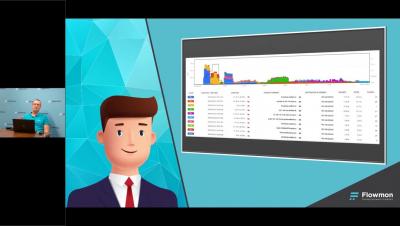
Monitoring has always relied on both network administration and network traffic analysis. Both fields provide ways to obtain data that allows us to obtain information about the general state of the platform. It is easy to understand that when faced with, for example, an application performance problem, we want to be able to observe and evaluate the traffic generated, and this is just what network traffic analysis does.
Understanding the context of an IT incident can greatly reduce the MTTR and enhance the ability to determine the root cause. In an IT environment, ‘context’ is used to refer to the subset of information necessary to troubleshoot and diagnose an incident, or event. For some scenarios, the context may be the downstream dependencies after a high availability pair of firewalls goes offline, and in others, it may be the datastore in contention from multiple VMs.
When you’re working with EC2 or containers, VPCs have long been viewed as a must-have. Without them, you will face a constant barrage of attacks aimed at your infrastructure and OS, such as brute force login attacks. But are VPCs still needed when it comes to AWS Lambda? What do you actually get when you put a function inside a VPC? And what are the downsides?
Istio is a hot technology right now. Giants such as Google and IBM have devoted entire teams of engineers to the project to push it to production readiness. Since 1.0 has been released recently, I wanted to write down some of the things that confused me coming from a strictly Kubernetes only world where we have Ingress controllers and Service load balancers and how Istio takes these same concepts but on stimulants.
LogicMonitor’s topology mapping functionality provides users with a scalable mapping solution that operates on an additive approach for establishing topological context (this means we only show what is necessary for your current viewing purposes).