Operations | Monitoring | ITSM | DevOps | Cloud

The latest News and Information on Monitoring for Websites, Applications, APIs, Infrastructure, and other technologies.

How to audit and clean up monitors effectively

Alert fatigue and blind spots develop together. Monitoring stacks that generate noise while missing critical issues may have incomplete coverage or poorly configured alerts. As they grow reactively and without structured coverage assessment, both issues worsen. Teams will often add monitors when something breaks and tune thresholds when alerts become unbearable, but rarely audit their overall setup to see if it works.

AI Powered IT Operations & Autonomous Resilience | Full SolarWinds Day Q2 2026 Event Replay

Watch the full SolarWinds Day 2026 event on-demand and discover how AI is transforming IT operations, observability, and incident response. In this exclusive event, SolarWinds CEO Sudhakar Ramakrishna and product leaders unveil the company’s vision for Autonomous Operational Resilience—powered by AI, automation, and unified visibility across hybrid and multi-cloud environments.

Microsoft Fabric outage disrupted analytics workloads on May 18, 2026

On May 18, 2026, organizations using Microsoft Fabric experienced a multi-hour outage that disrupted analytics workloads, reporting systems, and access to platform services across several regions. StatusGator detected the developing incident at 14:00 UTC using Early Warning Signals, 37 minutes before Microsoft officially acknowledged the outage at 14:37 UTC.

The $600 billion wake-up call: New Splunk research reveals downtime is a systemic business crisis

600 billion annual impact: Aggregate downtime costs for the Global 2000 have soared 50% in two years. $15,000 per minute: The average cost of downtime for organisations, highlighting the immediate financial impact of service disruptions. 3.4% stock price drop: The average decline in shareholder value following a single downtime incident.

What's New in Graylog V7.1 Webinar

What to Expect? Graylog 7.1 is built for lean security and IT operations teams who need real outcomes, not more tools, more add-ons, or more manual work. This 30-minute deep dive session covers what's new and what it means for your team. What you'll learn: See Graylog 7.1 in action: detection, triage, and documentation without compromise.

Reality Byes The Birth of Mobile DEX (Opening the Black Box)

On this edition of Reality Bytes, Dina and Tom welcome Rose Cicala, Director of Product Marketing, and Mile Djokic, Senior Product Manager, to discuss the launch of Mobile Experience — and what it means for the future of Digital Employee Experience. Together, they explore why mobile devices have become mission-critical for frontline and hybrid workforces, why mobile visibility has remained a major blind spot for IT, and how Mobile DEX changes that. The conversation covers healthcare, retail and manufacturing use cases, AI compliance, application insights, VDI convergence, and the growing shift toward mobile-first work strategies.

The New Compliance Crisis: AI Is Outrunning Its Controls

Enterprises have spent decades refining compliance frameworks around workflows that were linear, predictable, and well-documented. These frameworks were built for systems that executed actions deterministically and for human operators who made decisions slowly enough for oversight to keep up. In that environment, compliance could function as a retrospective discipline because the evidence required to validate behavior generally existed in complete, stable form.

12 IT Infrastructure Best Practices Every IT Leader Should Follow

Why do IT infrastructure issues continue to slow down teams even when tools keep improving? In most IT environments, the challenge is not a single failure. It is a set of ongoing operational gaps that are easy to overlook but difficult to control over time. A few of the common challenges include: In 2026, IT environments are more distributed and fast-changing than before. Hybrid infrastructure, cloud adoption, and strict compliance requirements make consistency harder to maintain.

Why SRE agents need orchestration, not just more tools

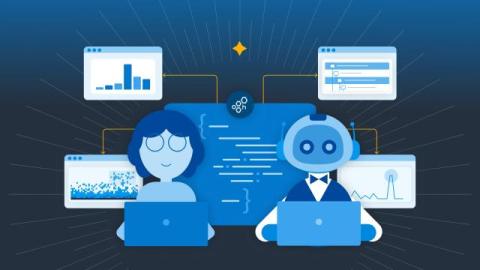
Single agents are a useful starting point for SRE workflows. They are not where the architecture should end. The first version is simple enough: connect an LLM to a few tools, give it a system prompt, and point it at your infrastructure. It can summarize an alert, pull logs, answer questions, and draft a useful next step. Then the workflow gets real. You add GitHub for runbooks, Kubernetes for cluster state, PagerDuty for incident context, Prometheus for metrics, and Mezmo for telemetry.