Operations | Monitoring | ITSM | DevOps | Cloud

The latest News and Information on Monitoring for Websites, Applications, APIs, Infrastructure, and other technologies.

Loki's Path to GA: Docker Logging Driver Plugin & Support for Systemd

Launched at KubeCon North America last December, Loki is a Prometheus-inspired service that optimizes storage, search, and aggregation while making logs easy to explore natively in Grafana. Loki is designed to work easily both as microservices and as monoliths, and correlates logs and metrics to save users money. Less than a year later, Loki has almost 6,500 stars on GitHub and is now quickly approaching GA.


SilverStripe - reducing error notifications by tens of thousands

SilverStripe run high-value websites and applications where reliability is vital for success. Here's how both the delivery and operations team gain visibility into the root cause of software problems during the development process, helping them to reduce error notifications by tens of thousands.

How to Monitor Website Changes

Before, to know detect a website changed its content or not, you had to manually visit the website and check by yourself. This is a thing from the past! Tools such as Hyperping can send instant alerts in case of changes. One way is making sure your API or marketing site returns the expected content. Some servers return an expected status code (200, OK) but can often return the wrong content in the response body, whether it is HTML content or JSON.

How to monitor the proper functioning of a website

In times where it is possible to instantly access information, the website is the main point of communication with the market for every company. The website is often the place where the crucial first impression is built. It generates leads, sells, provides customer service, gets in touch with the media, recruits etc. It is the company’s website that the traffic from advertising campaigns gets directed to—and not only from the online ones.

AWS Step Functions 101

We are going to talk about an essential part of AWS Lambda called “AWS Step Functions.” What are Step Functions? Why are they important for AWS Lambda users? What are they used for, and what can we expect to get by using them? Bare with us, and discover more critical information on Step Functions throughout this article. We’ll begin with the explanation of what are Step Functions. AWS Step Functions service is the most recent service released by none other than Amazon Web Services.

Is AWS Lambda actually useful?

If you’re in developing business, you’ve probably heard about AWS Lambda by now. In case you haven’t, AWS Lambda has been among us for years, and it certainly brought a whole new level for running a code. The benefits of using AWS Lambda are vast, and many developers already use AWS Lambda daily. If you’re not among them, read through this article to learn more about what AWS Lambda can do for you and your code.

Bringing AIOps to Hybrid Cloud Monitoring and Management

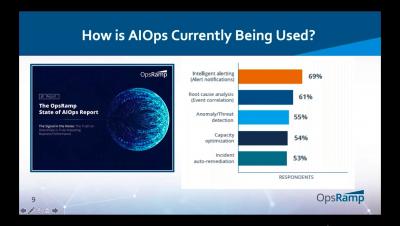
Artificial intelligence for IT Operations is purpose-built to ingest large sources of data from infrastructure and point tools, and produce actionable insights on root-cause analysis and incident remediation. How do you bring these innovations to an enterprise ecosystem that’s also in the middle of cloud migration and overall digital transformation?

The Three Pillars of Kubernetes Observability

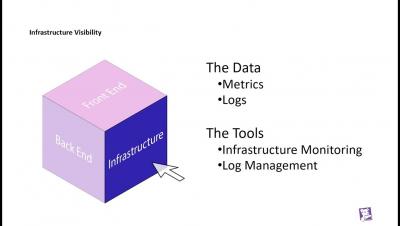
The three pillars of observability are metrics, logs, and traces. To get a complete view into your applications as well as the Kubernetes platform they run on, you need to be looking at all the different perspectives. In this session, we will look at each pillar to see how we can use the information collected to understand what is happening in our environment today and how to troubleshoot the problems we experience tomorrow. We will share how to do this using various open source tools as well as using the Datadog platform.