Operations | Monitoring | ITSM | DevOps | Cloud

The latest News and Information on Monitoring for Websites, Applications, APIs, Infrastructure, and other technologies.

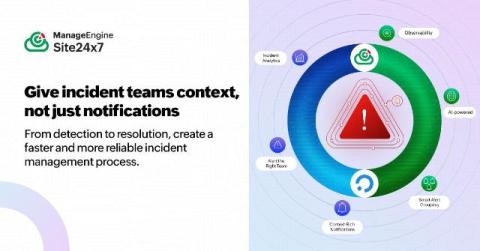
How to build a resilient incident management workflow using ilert

Your payment API suddenly returns 503 errors. Within seconds, your infrastructure monitors, application checks, and dependency monitors begin generating their own alerts. And while the dashboards keep flashing, the clock is still running. Your customers are waiting, internal teams are asking for updates, and engineers are trying to separate the real problem from the noise before the situation gets worse.

Monitor outages with StatusGator MCP and Claude

When a service your organization depends on stops working, you need to know whether the problem is internal or caused by a third-party provider. Connecting StatusGator to Claude gives you a faster way to find out. You can ask Claude what is down, investigate provider incidents, review affected components, and analyze historical uptime using data from your StatusGator account.

Open Source vs. Commercial Apache ActiveMQ Support

The finance team sees the "Apache License 2.0" on the ActiveMQ download page and concludes the software is free. The engineering team knows the broker requires configuration, monitoring, tuning, CVE patching, and incident response. All of those things cost engineering time, whether or not a license fee appears on the invoice.

The Great Telemetry Debate: Why AI-Ready Operations Require a True Data Fabric

If you are leading technology strategy today, you face consequential choices about how to manage your enterprise telemetry. Your decisions determine not only where logs, metrics, traces, and events are stored, but also who controls how operational data is collected, shaped, governed, and put to work in an optimal way for the security, observability, analytics, and AI systems that power your business.

AI SRE Agent Debugs a Lambda Timeout with the AWS MCP Server: AURA

A scheduled Lambda quietly stops completing and nothing pages you. AURA finds the function, reads its logs, and comes back with a three-second timeout. The usual path is opening the console, tracking down the right log group, and reading CloudWatch by hand. Here AURA connects to AWS through the MCP proxy AWS publishes, run locally with uvx against an AWS CLI that is already configured, so there are no new credentials to issue.

Solving bugs with elmah.io and Claude Code - a real-life example

I spend most of my day in Claude Code these days. Most of my development processes changed after having access to my own personal assistant. In this post, I'll show you a real-life example of how bug fixes are often done on elmah.io now. I hope it will inspire someone to optimize their workflow and get even more out of their elmah.io subscription.

What's new in VictoriaMetrics Anomaly Detection (Q2 2026)

Summary: The Q2 2026 development cycle moved VictoriaMetrics Anomaly Detection toward one simpler, continuously adapting workflow. The main addition is Temporal Envelope, an online model that handles trend, multiple calendar patterns, holidays, persistent changes, forecasts, and optional multivariate context without retaining the full fit history.

What is Port Mirroring and How does a SPAN Port Work?

Your dashboard shows every interface green, the counters look clean, and the application owner still insists the network is dropping their transactions. Where do you look next? Availability data tells you a link is up. It cannot tell you what crossed that link or how long the server took to answer. Only the packets carry that, and port mirroring is how most engineers get a copy without cutting into a live cable.

Third-Party Patch Management: How Application Patching Works and Where It Breaks

Most patch programs are built around the operating system. The vendor calendar is predictable and the tooling is mature. That is the smaller half of the job. Most of the software on a typical endpoint comes from somewhere else. Third-party patch management covers that half, and most teams run it with far less structure. The gap is easy to miss in day-to-day reporting. Windows Update finishes on a laptop, and the machine reports as patched. That report covers the operating system and nothing else.