Operations | Monitoring | ITSM | DevOps | Cloud

The latest News and Information on Monitoring for Websites, Applications, APIs, Infrastructure, and other technologies.

Getting started with OpenTelemetry instrumentation with a sample application

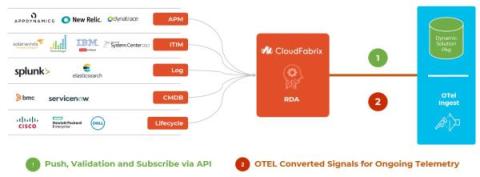
Application performance management (APM) has moved beyond traditional monitoring to become an essential tool for developers, offering deep insights into applications at the code level. With APM, teams can not only detect issues but also understand their root causes, optimizing software performance and end-user experiences. The modern landscape presents a wide range of APM tools and companies offering different solutions. Additionally, OpenTelemetry is becoming the open ingestion standard for APM.

Fly.io with Sentry

When developers build and deploy their apps, understanding what’s slow or broken in production is more a necessity than a convenience. With Sentry, developers are able to quickly pinpoint and fix issues that impact their end users or business, and we want every developer to have the best error monitoring in place from the moment they deploy code to production. So we’re partnering with Fly.io to do just that.

Next.js vs. React Performance

In the early days of the web, the idea of performance was relatively straightforward. Pages were static, and the most dynamic thing you might encounter was a blinking banner ad. But as the web evolved, so did our ambitions. Today it's not just about building web pages anymore; it's about crafting experiences. Load speed time and search engine optimization (SEO) matter just as much as the content on the page. Thus, the choice between React and Next.js is an important one, with real-world implications.

Visualize user behavior with Datadog Clickmaps

While understanding user behavior is key to effectively optimizing your application, it can be difficult to grasp how problems in individual sessions fit into larger trends. You could look at each relevant user session one by one to gauge how many users are experiencing an issue and to what degree. However, clicking through hundreds (or even thousands) of sessions is time-consuming and can overwhelm you with data that’s hard to analyze.

Grafana Loki hits 20K GitHub stars: 20 fun facts about the open source logging project

The Grafana Loki GitHub repository just hit 20K stars! You can’t exchange GitHub stars for coffee at Starbucks or pay rent with it, but this is a big milestone that is a testament to the enormous momentum of this open source project. Thank you to the Grafana Loki community — this couldn’t have been possible without you! To celebrate this 20K benchmark, here are 20 completely random, but fun facts and tips about Grafana Loki: Interested in learning more about logging?

Reference Architecture Series: Scaling Syslog

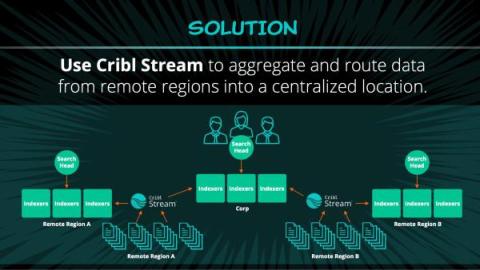
In this livestream, Cribl’s Ahmed Kira and I go into more detail about the Cribl Stream Reference Architecture, with a focus on scaling syslog. They share a few use cases, some guidelines for handling high-volume UDP and TCP syslog traffic, and talk about the pros and cons of some of the different approaches to tackling this challenge. It’s also available on our podcast feed if you want to listen on the go.