Operations | Monitoring | ITSM | DevOps | Cloud

The latest News and Information on Log Management, Log Analytics and related technologies.

WordPress Error Logs and Activity Logs

Logging is a fundamental part of software development. While an app is being developed, we rely on logging to confirm our inputs and outputs match our expectations. In production, logging can be an invaluable resource for tracking down bugs or measuring how users interact with the app. We can also consider logs as a sort of time-series value, where a timestamp is associated with a user’s specific action. These logs can be structured, gathered, and analyzed to provide teams with more information.

Asia Pacific Firms Need Analytics to Survive the Cloud Era

Many companies in Asia Pacific (APAC) were caught in a digital tailspin when Covid-19 hit, sacrificing security practices in their hurry to adjust to the new reality of remote work. Two years on, hybrid work is still the norm as the pandemic continues and seems to be a new way of life moving forward. Catalyzed by the coronavirus, firms big and small are now adopting cloud technologies as we tread deeper into a new data age.

CDN Logs and Why You Need Them

A Content Delivery Network (CDN) is a distributed set of servers that are designed to get your web-based content into the hands of your users as fast as possible. CDNs produce CDN logs that can be analyzed, and this information is invaluable. Why? CDNs host servers all over the world and are designed to help you scale your traffic without maxing out your load balancers. A CDN also gives you added protection against many of the most common cyber attacks. This activity needs to be closely monitored.

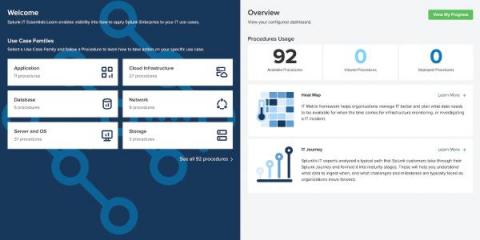
What is Splunk? - A Summary for UK Public Sector

To quote the UK National Data Strategy: Splunk is an advanced data platform that delivers right-time analytics from diverse data sets and that enables organisations to ask questions of all their data. It can be used to mitigate cyber security risk, improve performance, increase reliability and observe what is happening in the cloud.

Announcing the Control API Suite

As LogDNA has grown, many of our customers have too, meaning that they are bringing in more ingestion data sources and expanding their use cases for their logs. To help with managing more data, we’re excited to introduce the Control API suite. We’ve built 4 individual APIs that will help companies programmatically configure their data and how they want to ingest logs. Below, we’ll cover each new API in detail as well as why they are massively impactful for our customers.‍

Illuminate 2021 - Embracing open standards for big picture observability

We just wrapped up a fantastic 5th Illuminate, Sumo Logic’s user conference, filled with amazing customer speakers, partners, and Sumo Logic experts all sharing their insights and expertise. The level of engagement taking place during presentations, workshops and executive meetings showed the high level of interest in open telemetry, unified analytics and full-stack observability to solve the challenges inherent in application modernization and cloud migration.

Event and Log Management for Optimized Security and Performance

The full stack isn't just cloud-based, microservices apps, but includes on-premises and hybrid private cloud infrastructure and packaged applications. The challenges associated with aggregating, analyzing, reporting, and alerting intelligently on logs have become more complex than ever due to the acceleration of packaged and customized application deployment in support of business transformation, alongside the growing requirements needed to ensure security and compliance. This webinar will explore multiple methods to ensure compliance, identify threats, and optimize MTTR by monitoring, analyzing, and managing logs across all types of application and infrastructure architectures.

Troubleshooting Pod issues in Kubernetes with Live Tail

With the advent of IaaS (Infrastructure as a service) and IaC (Infrastructure as Code), it is now possible to manage versioning, code reviews, and CI/CD pipelines at the infrastructure level through resource provisioning and on-demand service routing. Kubernetes is the indisputable choice for container orchestration.