Operations | Monitoring | ITSM | DevOps | Cloud

Why You Need Remote Disk Management

In today's increasingly distributed workforce, remote disk management has become a cornerstone of effective IT administration. With employees accessing corporate data from various locations and devices, ensuring the security and integrity of disk storage is more challenging-and more critical-than ever. Remote disk management allows IT admins to monitor, configure, and secure disk drives on endpoints, regardless of their physical location. This capability is essential for maintaining compliance, preventing data breaches, and mitigating vulnerabilities that could be exploited by cybercriminals.

Full-Service SEO: Unlocking Your Website's Potential

In the world of online business, having a strong presence on search engines is no longer a luxury - it's a necessity. Full-service SEO goes beyond the basics of keyword research and link building. It offers a comprehensive strategy that touches every aspect of your website's performance, ensuring you don't just get noticed but also build a long-lasting, meaningful relationship with your audience.

5 Practical Tips to Design Your Business Premises Without the Stress

Every company needs to have a business premises, and it's where the business gets most of its work done. This could be a retail premises, office, or something similar. You shouldn't just pick something at random and leave it at that, though. Instead, you'll need to design your business premises to actually help your company. It'll have more of an impact than you'd think.

Squadcast Strengthens Its Leadership in IT Alerting and Incident Management in the G2 Spring Report

2025 has already started out to be a remarkable year for Squadcast—with our key wins in the G2 Spring Reports, our acquisition by SolarWinds, and a series of impactful product releases and improvements. Our mission has always been clear: to deliver a unified platform that seamlessly integrates On-Call Management and Incident Response, empowering teams to boost service reliability and productivity—all without the burden of context switching.

Why your serverless monitoring is failing (and how to fix it)

Monitoring systems have become absolutely critical for modern businesses, and understanding the fundamentals of application monitoring is key to success. But when it comes to serverless monitoring, the game gets even trickier. Serverless architectures, while offering incredible flexibility and cost advantages, present unique monitoring challenges that traditional approaches simply can't handle.

The DevOps secret to 99.9% uptime: The ultimate Kubernetes monitoring guide

Monitoring your Kubernetes clusters is critical for maintaining reliable applications. But with so many metrics to track and tools to choose from, setting up effective monitoring can feel overwhelming. The Cloud Native Computing Foundation (CNCF) highlights record Kubernetes adoption, underscoring the growing need for robust monitoring solutions. Search for "Kubernetes monitoring" and you'll find a sea of contradicting information, countless tools, and complex setups.

How top DevOps teams use feedback loops to crush reliability goals

Delivering reliable software is like trying to hit a moving target. As a DevOps professional, you're constantly balancing speed and stability, all while user expectations grow and technology landscapes shift. Without proper feedback mechanisms, you're essentially flying blind. The good news? DevOps feedback loops provide the visibility and insights needed to navigate this complex environment. They are the fundamental building blocks that enable continuous improvement in software delivery and operations.

Increase Resource Utilization up to 80%-Automatically

Companies running Kubernetes workloads often discover significant and unexpected waste or underutilized resources in their compute environment. Smart organizations implement a host of FinOps activities to mitigate this waste and the cost it incurs: … and the list goes on. But these are infrastructure-level optimizations that don’t address waste within an application.

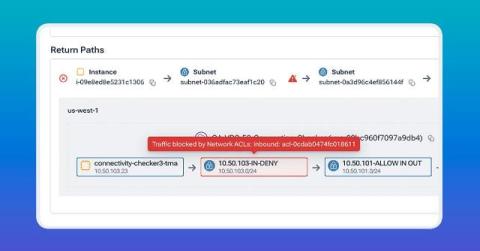
Cloud Pathfinder: A Key to Cloud Network Intelligence

Cloud Pathfinder simplifies cloud troubleshooting by visually mapping connectivity paths between cloud endpoints and integrating the power of AI, identifying where and why traffic is being blocked. By analyzing cloud configuration metadata, it provides instant, actionable insights into routing and security issues — saving engineers hours of manual work.