Blancco achieves goal of becoming carbon neutral
Global leader in data sanitization affirms commitment to sustainability by achieving carbon neutrality in line with globally accepted standard PAS 2060.


We are elated to announce that ManageEngine has been recognized in the Gartner® Magic Quadrant™ for Application Performance Monitoring and Observability for the tenth time! The applications performance monitoring industry has grown tremendously over the past decade and the wide range of vendors highlights this growth.
AWS’s new Graviton3 EC2 instances are built on its third generation of custom Arm-powered processors. These instances promise up to 25 percent better performance over Graviton2 for compute-intensive workloads. This means that, for applications like distributed data analytics, machine learning, video encoding, gaming, and more, migrating to Graviton3 instances can provide better performance, cost savings, and more energy efficiency.
Most of us picture cloud security threats as bad actors in some hostile country. More often, it’s you and your coworkers. Talk about cloud security and you’re likely to discuss provider-focused issues: not enough security, not enough auditing, not enough planning. However, the biggest cloud security risks continue to be the people who walk beside you in the hallways.
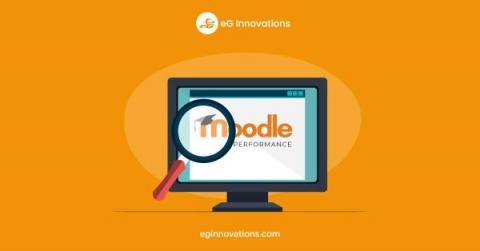
In this article, we will cover a case study of one of our higher education customers using eG Enterprise to proactively monitor and troubleshoot their Moodle applications to ensure service availability and performance for their staff and students.
On June 21, 2022, the US-based global content delivery network (CDN) provider and security company Cloudflare suffered an outage at 6:27 UTC that lasted until 7:42. The outage was caused by a network configuration error that affected 19 of Cloudflare's data center locations — Amsterdam, Atlanta, Ashburn, Chicago, Frankfurt, London, Los Angeles, Madrid, Manchester, Miami, Milan, Mumbai, Newark, Osaka, São Paulo, San Jose, Singapore, Sydney, Tokyo.
This week we released v5.0 of StackState’s observability and AIOps platform, which introduces a rich set of new capabilities. Our latest release contains a little something for everyone responsible for reliably running business critical workloads in dynamic environments – SREs, DevOps, central platform teams, even business teams – and for new and existing users alike.
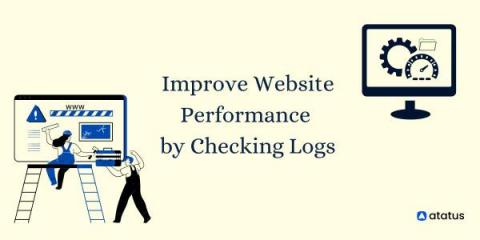
In the early days of log analysis, application developers would use their logging libraries to write logs to files stored on a disk. After years of relying on those libraries, they found that they were unable to monitor the performance of their applications anymore because they didn’t understand the way their logging libraries worked. This led to a shift from using log files stored on a disk to using Syslog.
For the vast majority of organisations, some form of round-the-clock cover is critical to successful business operations. On-call is an essential part of an effective incident response process, yet there is no commonly accepted playbook on how to most effectively structure and compensate on-callers. We ran a survey to uncover the mysteries of how on-call works in organisations of different shapes and sizes around the world.