TLDR: We launched a community marketplace for Cortex Plugins! Share, discover, and implement plugins built to personalize and extend your experience. Learn how, why, and what to try first, below.
Picture this: Your team is scrambling during a system hiccup. Messages fly back and forth, everyone's checking different dashboards, and no one has the full picture. Sounds familiar? That's why more companies use internal status pages as their single source of truth. These private dashboards show you everything that matters.
According to IDC, 80% of organizations are running hybrid and multicloud environments, bringing new complexities and risks for IT leaders*. When it comes to operations, IT teams find it challenging to maintain visibility across cloud and on-prem systems, optimize more and more tools, and automate operations—all while ensuring cost efficiency and staying agile. Traditional approaches complicate things further, often leading to silos and inefficient resource use.
Network discovery is the crucial first step for any IT team looking to manage a modern, dynamic network. As companies embrace flexible work options and adopt complex hybrid environments, taking stock of all connected devices is essential to maintain performance, ensure security, and enable users to stay productive from anywhere. This article will cover everything you need to know about network discovery, from its core purpose to how it works to the tools that make it happen.
Grafana Alerting has seen steady growth and adoption since it was revamped in Grafana 9. Since then, we’ve been busy making your alerts more robust, more reliable, and easier to manage. As part of that process, Grafana Alerting has adopted several concepts from Prometheus. The Prometheus alerting model is well understood and flexible, and with Grafana Alerting we want to bring that same flexibility to all Grafana data sources.
Typically, a technical writer takes the product created by a development team, and writes the documentation that expresses the product to its users. At Canonical we take a different approach. Documentation is part of the product. It’s the responsibility of the whole team. Documentation work is led by a technical author, who is part of the team, and whose title signals their technical authority.
In 2021, we announced the release of the Datadog Lambda extension, a simplified, cost-effective way for customers to collect monitoring data from their AWS Lambda functions. This extension was a specialized build of our main Datadog Agent designed to monitor Lambda executions.
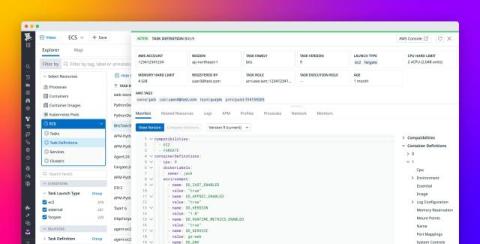
Amazon Elastic Container Service (ECS) is a container orchestration service that enables you to efficiently deploy new applications or modernize existing ones by migrating them to a containerized environment. Building on ECS gives you the flexibility, scalability, and security that containers offer, but also presents challenges in monitoring and troubleshooting your applications and infrastructure.