Every data center has a rhythm. When you think about a single application—SAP, for example—it has certain “beats.” First thing Monday morning, you see a steady and fast cadence, while over the weekend, it slows to a light tap. And there may be seasonality that rises to a crescendo.
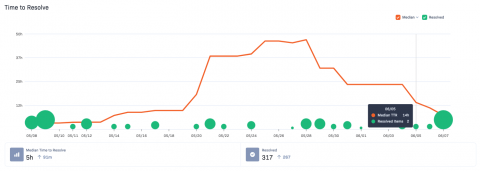
In today's fast-paced tech environment, swiftly and efficiently resolving software errors is essential to maintain the seamless operation of your application. A prominent problem for engineering leaders is they often need help tracking and effectively understanding their error resolution performance over time. With a comprehensive, real-time visualization of this data, making informed decisions, setting performance benchmarks, and optimizing resources become easier.
InfluxDB Cloud 3.0 is a versatile time series database built on top of the Apache ecosystem. You can query InfluxDB Cloud with the Apache Arrow Flight SQL interface, which provides SQL support for working with time series data. In this tutorial, we will walk through the process of querying InfluxDB Cloud with Flight SQL, using Go. The Go Flight SQL Client is part of Apache Arrow Flight, a framework for building high-performance data services.
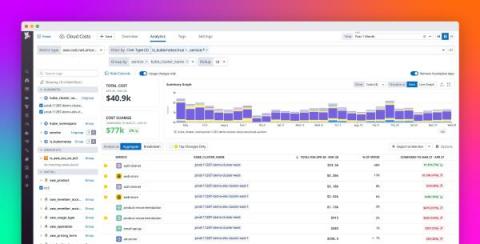
June 7, 2023 It’s no secret that Kubernetes is one of the fastest-growing technologies in use today for deploying and operating applications of all types in the cloud. It’s also no secret that Kubernetes’ popularity is a significant contributor to fast-growing cloud bills. FinOps teams are constantly looking for ways to lower their cloud spend, in cooperation with the DevOps, Engineering and App owner teams that control this infrastructure.
Canonical’s MLOps portfolio is growing with a new machine learning tool. Charmed MLFlow 2.1 is now available in Beta. MLFlow is a crucial component of the open-source MLOps ecosystem. The project announced it had passed 10 million monthly downloads at the end of 2022. With Charmed MLFlow users benefit from a platform where they can easily manage machine learning models and workflows.
Running a Kubernetes cluster isn’t easy. With all the benefits come complexities and unknowns. In order to truly understand your Kubernetes cluster and all the resources running inside, you need access to the treasure trove of telemetry that Kubernetes provides. With the right tools, you can get access to all the events, logs, and metrics of all the nodes, pods, containers, etc. running in your cluster. So which tool should you choose?
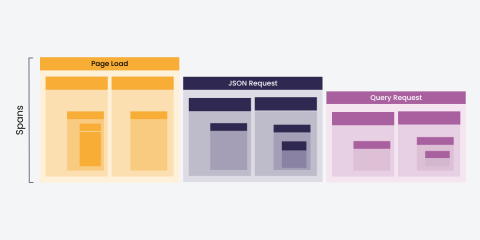
In modern software development, distributed systems have become increasingly common. As systems grow more complex and distributed, it can be challenging to understand how requests or messages move through the system and where bottlenecks may occur. This is where distributed tracing comes in. Distributed tracing is a technique that allows developers and operators to monitor and understand the behavior of complex systems.
Rising container usage has fueled a growing reliance on container orchestration systems such as Kubernetes, EKS, and ECS. As organizations increasingly opt to run these systems in the cloud, their cloud spend tends not only to grow but also to become more opaque due to the dynamic complexity of these environments. Typically, various services, teams, and products share cluster resources, and as nodes are added and removed, those resources continuously shift.