This article was published in The New Stack. For most developers, software development means there is an API for almost everything, hardware is provisioned via the cloud and the core focus is on building only the features most crucial to your business. Of course, all these integrations and modern distributed architectures create their own set of problems. Having full insight into your application has become even more important and is now commonly known as observability.
Many years ago, I attained my private pilot’s license. This entailed completing a very structured program, similar to how most companies introduce a product to a new user. Let’s be honest, there is a really good reason for this – to avoid the crash and burn. With flight training, it’s literal, while with products it’s a bit more figurative (except when you YOLO something into production–that can cause a crash and burn–and leave for a bad first impression).
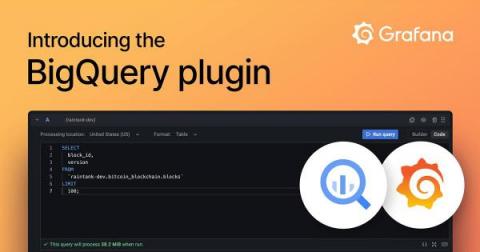
We are happy to announce that an official Google BigQuery data source plugin for Grafana has arrived! Based on the popular DoiT International BigQuery DataSource community plugin, the new Grafana BigQuery plugin brings a new and improved query editor experience plus support for all BigQuery data types, Grafana Alerting, and query caching.
There are a number of lessons I learned guiding weeks-long backcountry leadership courses for teens that I carried with me into my roles in incident management. In this blog post, I’ll share three that stand out.
Hospitals that adopt electronic health records (EHR) to optimize clinical workflows face the decision of how to integrate EHR alerts into their workflows. The rationale is to surface actionable data from EHR systems and present healthcare providers with this information to supplement their day-to-day clinical decisions.
As we continue to build our vision around Shipa Insights, we are pleased to announce that we are now including engineering efficiency statistics along with the policy and security violations from our initial release. Getting started with Shipa Insights is very easy, Shipa Insights is there for you automatically. Navigate to the Insights Module and take a look at what Shipa has been keeping track of / discovering on your behalf.
It’s right there on our community page—the statement that “Project Calico is first and foremost a community.” With that in mind, we wanted to make it easier for new contributors to get involved. It’s a win-win scenario—developers experience less frustration, they can get their work done, and have their contributions considered. Plus, the project can easily benefit from the contributions.
Kubernetes shouldn’t be reserved for production. Using local Kubernetes in development means you can build and test your service using the same technologies as your live deployments. Some organizations provide a shared Kubernetes cluster for development activities. Others offer on-demand virtual clusters that serve staging environments for significant changes.
The software industry is moving toward teams that own the services they build. This concept encloses principles and possibilities from movements toward microservices, DevOps, Agile, and Project to Product. In these paradigms, a team of people delivers software that provides valued capabilities. These capabilities help customers get their work done, support business operations, or enable other software to do these.