The Apache Tomcat is an open-source implementation of the Jakarta Servlet, Jakarta Server Pages, Jakarta Expression Language, Jakarta WebSocket, Jakarta Annotations and Jakarta Authentication specifications, all being a part of the Jakarta EE Platform. That is the official description of Apache Tomcat.
Kubernetes has grown immensely, and its use within organizations is maturing. While Kubernetes’ growth is exciting, security concerns around applications deployed on Kubernetes are mounting. Red Hat performed a survey with hundreds of DevOps professionals, and it showed that 55% delayed application releases due to security issues.
User experience is the pinnacle of cloud technology. With cloud data centers handling 94 percent of all workloads, cloud optimization is vital. Users need fast, agile, scalable, and stable solutions over the long term. But how do you build these solutions? This is where cloud-native technology comes in. Cloud native computing provides the foundation for building, designing, running, and managing applications in the cloud.
One of the great promises of digital transformation is its ability to vastly enhance the customer experience. By empowering your workers with the tools and information to deliver extraordinary customer service, you create increased value for your customers and your business. However, driving customer digital transformation requires a shift in mindset and approach.
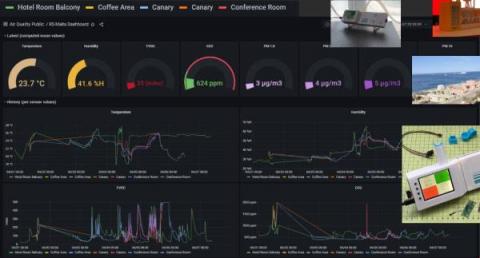
With climate change and other environmental factors causing pollution rates and ground-level Ozone levels to climb, poor air quality is an increasingly growing global problem. In fact, fossil air pollution is responsible for 1 out of 5 deaths worldwide, according to a 2021 study conducted by Harvard University.
With the recent advancements in service delivery through containers, Linux has gained a lot of popularity in cloud computing by enabling digital businesses to expand easily regardless of their size or budget. These advancements have also brought a new wave of attack, which is challenging to address with the same tools we have been using for non cloud-native environments.