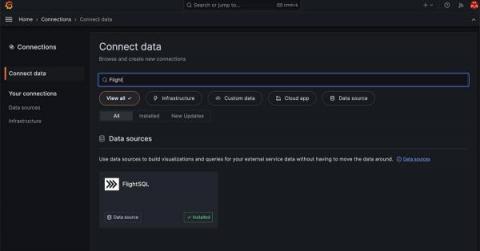
Today we have exciting news for Grafana customers with Flight SQL data sources: Now there is a new community plugin available for Grafana that allows it to communicate with Flight-SQL-compatible databases. Flight SQL is a client-server protocol developed by the Apache Arrow community for interacting with SQL databases. It utilizes the Flight RPC framework and the Arrow in-memory columnar format.
Separate “debug” and “release” builds are very common in embedded development. Typically the notion is improved debug capabilities (less aggressive compiler optimizations, more debugging information like logs) vs. highly optimized and hardened production release builds. I’m here to describe disadvantages to this practice, and why it might make sense to consolidate to a single build! Like Interrupt? Subscribe to get our latest posts straight to your mailbox.
What do network operators want most from all their hard work? The answer is a stable, reliable, performant network that delivers great application experiences to people. In daily network operations, that means deep, extensive, and reliable network observability. In other words, the answer is a data-driven approach to gathering and analyzing a large volume and variety of network telemetry so that engineers have the insight they need to keep things running smoothly.
OpenTelemetry was launched in May 2019, as a merger of the OpenCensus and OpenTracing projects. The open-source, vendor-neutral project resides within the Cloud Native Computing Foundation (CNCF), which virtually ensures its longevity and widespread adoption. In fact, OpenTelemetry has gained significant traction in recent years, with support from many major cloud providers and the tech industry.
If you want to deliver an outstanding user experience you must know the differences between DEM and RUM. In this modern world, businesses are embracing digitization to provide better services to their customers. However, customer expectations and preferences have changed drastically over time. To address customer demands, businesses have started investing in systems and applications that enhance the user experience.
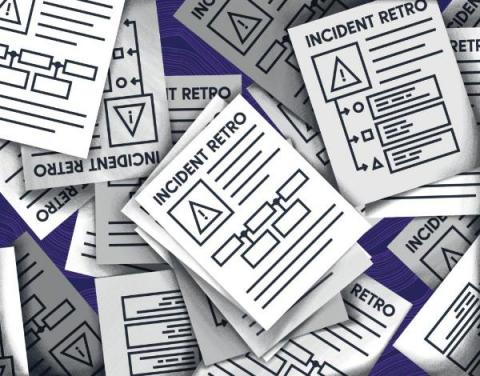
At a recent training session, Jeli spent a great deal of time covering incident retrospectives and what makes an incident worthy of studying. My colleague Ben Hartshorne asked a fascinating question, which I’ll paraphrase here: That caught me by surprise. We had a great discussion, and it made me consider approaches I hadn’t before.
Grafana is a popular open-source tool for visualizing and analyzing data from various sources. It provides a platform for creating interactive, customizable dashboards that display real-time data in various formats, including graphs, tables, and alerts. When powered by Mezmo's Telemetry Pipeline, Grafana can access a wide range of data sources and provide a unified view of the performance and behavior of complex systems.
Elasticsearch has made a name for itself as a powerful, scalable, and easy-to-use search and analytics engine, enabling organizations to derive valuable insights from their data in real-time. However, to truly unlock the potential of Elasticsearch, it is essential that the right data in the right format is provisioned to Elasticsearch. This is where integrating a telemetry pipeline can add value to Elasticsearch.