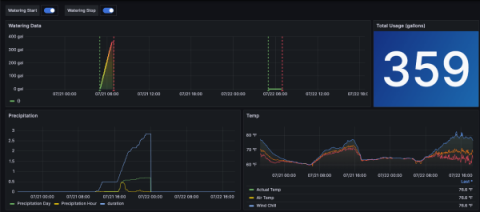
I’ve had a swimming pool at my house in Massachusetts since 2016. One of the problems that pool owners like myself face when we go on vacation or leave for several days is evaporation from the pool and the water level dropping below the skimmers. This can happen due to sunlight and warm temperatures. It can also happen when temperatures drop at night and the pool is being heated — the water temperature is warmer than the air, causing the water to evaporate.
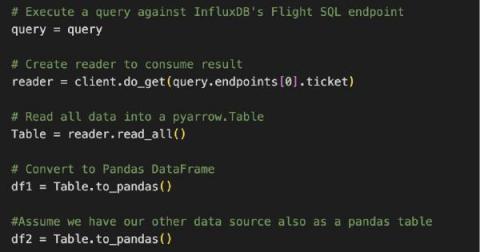
In today’s data-driven world, the ability to collect and query data from multiple sources has become a very important consideration. With the rise of IoT, cloud computing and distributed systems, organizations face the challenge of handling diverse data streams effectively. It’s common to have multiple databases/data storage options for that data. For many large companies, the days of storing everything in the singular database are in the past.
As technology professionals, we must consider the evolution of security and its connection to literature, such as George Orwell’s “1984” and Aldous Huxley’s “Brave New World.” The digital threats we face are often unseen, lying dormant until they can be weaponized for both good and evil purposes. Advancements in machine learning and algorithms have revolutionized data analysis, allowing us to observe and analyze behavioral patterns both online and offline.
Very few SaaS products exist completely independently. Between cloud service providers, payment processors, content delivery networks, and more, chances are you rely on external systems to keep your product working. When these systems fail, it can leave you feeling pretty helpless. In some cases you might have fallback options, but oftentimes all you can do is wait for recovery and clean up the fallout.
Django is one of the most popular web frameworks for building applications. Its elegance and flexibility make it a favorite among developers, enabling them to craft intricate applications with ease. However, as applications grow in complexity and user traffic grows, the need for active performance monitoring becomes imperative.
In a world where companies pivot for breakfast, lunch and dinner – it’s rare to see a tech house commit to a large, time intensive project. Big projects take a long time to implement. Sometimes too long. But we asked ourselves, “Can we give users an early look at some of the stuff we’re working on?” We wanted something that was in-between a public beta and our own GitKraken preview states.
With the widespread adoption of Kubernetes, the Cloud Native Computing Foundation (CNCF) ecosystem has evolved to include projects that address the challenges of using a container orchestrator system. One such challenge is managing and deploying clusters, which can become complex as organizations scale their Kubernetes requirements. Fortunately, Cluster API (CAPI) provides a solution.