Operations | Monitoring | ITSM | DevOps | Cloud

Measure what matters and fix issues fast with Metrics: now in beta

Four years ago, we stepped on some big toes with our developer-first performance monitoring. Since then thousands of software teams have adopted our modern APM solution. But while Performance checks off a lot of boxes, some dev teams juggle separate tools for metrics, leading to a fractured experience. And honestly, what good is a metric without all the context you get from Sentry? Not very – it makes tying problems back to underlying errors or performance issues unnecessarily difficult.
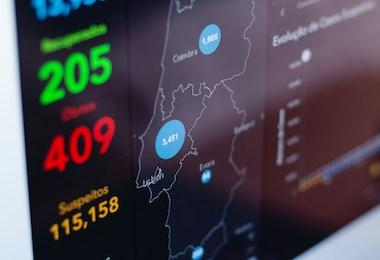
The Top 10 Web Application Monitoring Tools

Wherever end-user success is critical to a business, your website’s functionality needs diligent testing. Therefore web application monitoring is required for many organizations. Conducting web application monitoring can also offer a whole host of additional advantages to organizations. For example, tracking user interactions and behaviors within the web application aids your organization in understanding how users engage with your application.

Future Trends In Kubernetes Cost Management: What To Expect

Kubernetes has emerged as a pivotal force in shaping modern cloud infrastructure. Originating as a brainchild of Google, Kubernetes has evolved into an open-source platform that has revolutionized how applications are deployed, scaled, and managed across a vast network of machines. Its ability to orchestrate containerized applications efficiently makes it an indispensable tool within cloud computing. However, with great power comes great responsibility, particularly in the realm of cost management.

Transforming Financial Services with Modern Observability: Moov's Story

As a new company poised to transform the financial services industry with its modern money movement platform, Moov wanted an equally modern observability platform as part of the company’s operational tech stack. With Moov's platform hosted in Google Cloud, it uses a diverse range of technologies to allow clients to accept, store, send, and spend money. The integration of numerous software providers further amplifies the complexity of each transaction.

The Business Case for OpenTelemetry - APM for Modern Applications

DevOps professionals know that ensuring optimal application performance is paramount. More and more customers and prospects interact with companies online, and any hiccup can impact your bottom line. What’s more, companies continue to leverage cloud-native apps for improved flexibility and resource optimization. All of which means that Application Performance Monitoring (APM) tools need to evolve.

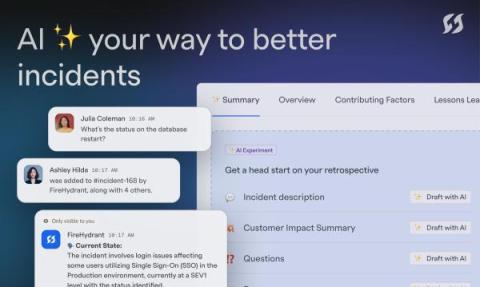
FireHydrant is now AI-powered for faster, smarter incidents

Over the last five years we’ve seen our customers run 583,954 incidents more efficiently thanks to a shared workspace, powerful Runbook automations, and auto-captured data. Yet despite a great deal of progress, incident efficiency hasn’t achieved peak potential. We talk to a lot of folks that are still stuck in the muck: new responders struggle to get up to speed quickly, incident commanders wade through post-incident drudgery, and knowledge silos prevent comprehensive improvements.

10 steps to proactive IT infrastructure monitoring

You can elevate your IT infrastructure monitoring with AIOps. AIOps offers full-stack visibility, enhancing IT infrastructure monitoring efforts. This lets you transform the familiar monitoring landscape by turning the chaos of constant alerts into a proactive approach to problem-solving. IT infrastructure monitoring challenges typically relate to the complexity of backend systems, especially when it comes to cloud platforms. For example, consider the following.

Fault Injection in your release automation

One of the real successes of the Agile Software development movement has been the push to have regular, frequent deployments. This has manifested as build and deployment automation and the general adoption of CI/CD. As engineers automate more processes of their software release lifecycle, an important question is how to automate Quality Assurance, which includes resilience testing and, more specifically, Fault Injection.