Operations | Monitoring | ITSM | DevOps | Cloud

Observability for the Software Industry: Top 4 Challenges and How Monitoring Can Help

Software companies face more challenges than ever before to keep pace in an ever-evolving industry that requires innovation and reliability. The pressure to adapt to fast-moving and sophisticated technologies can easily create silos amongst teams and a lack of visibility within organizations. With legacy technology stacks and systems now in the rearview mirror, the focus of large-scale software development has shifted to ensuring standardization and distributed computing in a growingly serverless world.


Continuous integration for Angular applications

Automated testing is the foundation of your continuous integration practice. Automated testing clarifies the status of build processes for your team’s applications, ensures that tests run on every commit or pull request, and guarantees that you can make quick bug fixes before deploying to the production environment. In this tutorial, I will show you how to automate the testing of an Angular application.

3 Metrics to Monitor When Using Elastic Load Balancing

One of the benefits of deploying software on the cloud is allocating a variable amount of resources to your platform as needed. To do this, your platform must be built in a scalable way. The platform must be able to detect when more resources are required and assign them. One method of doing this is the Elastic Load Balancer provided by AWS. Elastic load balancing will distribute traffic in your platform to multiple, healthy targets. It can automatically scale according to changes in your traffic.

What Are the Benefits of Investing in Cloud Storage Security?

As more and more businesses and individuals choose to store their data online, ensuring the safety of information is becoming exceptionally crucial. According to recent statistics from the Hosting Tribunal, over 95% of IT professionals use cloud storage. This number is expected to grow steadily.

Galileo Enhancements for Brocade Data Collection

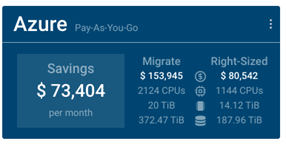
Are you migrating to Azure or another public Cloud? A client of ours did, and they didn’t use Galileo Cloud Compass. Do you know what happened? They didn’t experience the savings they expected, and their Azure invoices were a lot more than expected—about 60% more. There are a couple of reasons for this. One is that they didn’t have an accurate way to price their workload for the Cloud. Just think about understanding the pricing model for each of the major Cloud vendors!

Why Right-Sizing in the Cloud is Everything

Are you migrating to Azure or another public Cloud? A client of ours did, and they didn’t use Galileo Cloud Compass. Do you know what happened? They didn’t experience the savings they expected, and their Azure invoices were a lot more than expected—about 60% more. There are a couple of reasons for this. One is that they didn’t have an accurate way to price their workload for the Cloud. Just think about understanding the pricing model for each of the major Cloud vendors!

Say goodbye to client network outages caused by configuration mishaps

Network downtime opens the gates to productivity loss and customer attrition and can affect business growth moderately or even severely. Usually, the reasons behind a network outage are the following: Errors in network endpoints: Things like a network bottleneck or a spike in temperature can interrupt a client’s network operations and then snowball into an outage. Operational slip-ups: According to research done by Uptime Institute, 70% of data center and service downtime is due to human error.