Operations | Monitoring | ITSM | DevOps | Cloud

Bringing the SaaS ecosystem together to improve cybersecurity

In today’s digital environment, no company is immune to cyberattacks. In fact, more than one-third of organizations worldwide have experienced a ransomware attack or breach that blocked access to systems or data, according to IDC.1 From the Capital One incident to the SolarWinds attack, businesses and organizations of all facets and sizes are at the forefront of such threats.

Four Use Cases for Optimizing Your Cloud Operations With PagerDuty Runbook Automation

The cloud is easy and powerful—until it’s not. Once companies have customers, commitments, and compliance concerns, they often have to create cloud operations teams to manage the cloud on behalf of their fellow employees. Often, organizations that migrate to the cloud find themselves hampered by inefficient cloud operations if they haven’t standardized their IT procedures for operability.

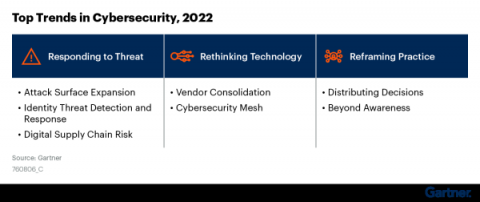
Top Trends in Cybersecurity 2022: A Gartner Report

Gartner recently released a report highlighting the top trends in cybersecurity for 2022. They discuss how businesses must reframe their security practices, rethink their technology, and adopt new responses to modern threats. This is in line with DevSecOps trends that we see in the market and hear about from our customers. Companies that are working in this way are taking a more holistic approach to cybersecurity by adopting tools that speed up and, when possible, automate security.

Keep Stakeholders Informed During Major Incidents

During major incidents, it’s crucial that all stakeholders are provided with the status updates they need. Those communications however need to be tailored to what the stakeholder actually needs, and provided in a streamlined format that works best for them. Just like alert fatigue, communication fatigue can be detrimental during an outage or other service reliability issue.

Understanding and Implementing a Software Bill of Materials

Software programs today can be likened to a complex stew, with multiple ingredients sourced from disparate places. In software, open-source tools are a major ingredient. According to the 2020 Open Source Security and Risk Analysis (OSSRA) report produced by the Synopsys Cybersecurity Research Center, 99 percent of the codebases contain at least one open source component, with open source comprising 70 percent of the code overall.

Continuous integration for Go applications

Go, an open-source programming language backed by Google, makes it easy to build simple, reliable, and efficient software. Go’s efficiency with network servers and its friendly syntax make it a useful alternative to Node.js. All network applications need well-tested features, and those developed in Go are no different. In this tutorial, we will be building and testing a simple Go blog.

AWS Lambda: function URL is live!

AWS announced the release of the Lambda Function URLs feature today. In this post, I describe what it is, how it works, and how you can benefit from it. API Gateway and AWS Lambda is a potent combination and lets you build REST APIs without having to worry about the underlying infrastructure. API Gateway offers many powerful features out-of-the-box, including: Understandably you pay a premium for these features.

Observability for State and Local Government: Top 3 Challenges and How Monitoring Can Help

State and local governments require a high level of performance and reliability for the millions of people accessing their web applications every day. The talent shortage and lack of resources to train their staff on how to use new technologies prevents them from drawing valuable insights from modern IT environments. IT infrastructure monitoring allows state and local governments to stay ahead of technology trends and face common challenges with intelligence and transparency.