Operations | Monitoring | ITSM | DevOps | Cloud

Advantages of Using a Mock API to Accelerate Development

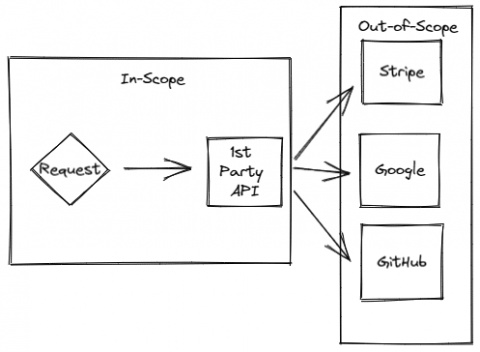
Mocking APIs is an increasingly popular trend, with more and more developers seeing the advantages of mocking dependencies rather than spinning up actual duplicates of resources. On a high-level, a mock API means that you have a service that returns static data, which in turn is based on a real API.

Red Hat Shares - Cloud services basics

Enterprises spent US$178 billion on cloud infrastructure services in 2021, 37% more than in 2020. And “global spending on cloud services is expected to reach over US$482 billion in 2022.” Clearly the use of cloud services is on the rise. But what are cloud services exactly, and why are they beneficial? Cloud services are infrastructure, platforms, or software that are hosted by third-party providers and made available to users through the internet.

Monitor PlanetScale with Datadog

PlanetScale is a serverless, MySQL-compatible database platform powered by Vitess. PlanetScale handles database scaling while also providing you with the tools to increase your development velocity, such as branching, non-blocking schema changes, automatic backups, built-in connection pooling, as well as a helpful interface and CLI. Datadog’s new integration gives you deep visibility into your PlanetScale databases, so you can optimize your usage and costs.

Testing Flask framework with Pytest

Writing tests in any programming language can be difficult, but it does not have to be. In this tutorial, I will show you how you can easily write and run tests using Flask and Pytest. As a bonus, we will also integrate a CI/CD pipeline to run tests on a Flask app using CircleCI. Be sure to check out our other Flask tutorials to learn about application logging, authentication decorators, and automating Flask deployments.

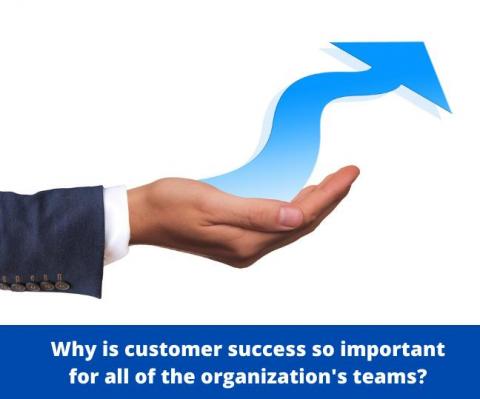
Why is customer success so important for all of the organization's teams?

Success is what every business envisions. Yet, this journey definitely isn’t linear or straightforward. As a company looking for success, you probably focus on marketing your product and closing as many sales as possible. But what do you do after that? Does your journey end there? Engaging with customers does not end with the sale. Assuring customers benefit from your product and collaborating with them to provide the greatest possible service is a long-term commitment.

Is hyperautomation the key to digital world success?

In this article, we look at the core concepts of SAP digital transformation, its role in enhanced decision making, and how hyperautomation could be the secret to creating a competitive advantage for your organization. Once seen as a costly legacy system for many organizations, SAP is no longer the ‘unwieldly’ application it once was.

How IT leaders can make the leap from tech leaders to business drivers

Today, there is a need for every business to be digital, and technology as you know it lies at the heart of every business. Determining technology’s role in enabling and driving business success has always been a top priority for IT leaders. But these days, IT leaders are also faced with the added pressure of adjusting to the recent economic and societal changes, namely, remote work and employee mobility, to drive viable business results.

New Active Directory integration features in Ubuntu 22.04 - FAQ

Linux Active Directory integration is one of the most popular and requested topics from both the community and our clients. On May 17 we delivered a webinar on the new AD integration features introduced with 22.04 (now available on demand) and following that we received an overwhelming number of questions. In this blog post we would like to address directly the most frequent ones

Embedded Linux development on Ubuntu - Part II

Welcome to Part II of this three-part mini-series on embedded Linux development on Ubuntu. In Part I, we set the stage for the remainder of the series and gave an overview of snaps, the packaging format at the heart of embedded devices running Ubuntu. Snaps are a secure, confined, dependency-free, cross-platform Linux packaging format. Software publishers often want to manage their application components using containers.