Operations | Monitoring | ITSM | DevOps | Cloud

An Observability Guide From Someone with a Precarious Grasp on the Topic

I’m Phillip, a product manager here at Honeycomb. After eleven-ish months of working on our product, I totally understand observability, right? ...Kinda? Sorta? Maybe? I'm not sure—but, I have been sitting in this space long enough to be a little better than clueless. Here's my guide on the topic. I hope it helps, especially if you’re passionate about exploring alternative ways you or your team can manage today’s cloud-native applications.


Developing a pipeline-builds logging system with CircleCI webhooks and Airtable Automations

Ever since CircleCI introduced webhooks, I have been excited about the possibilities this new way of integration opens up to developers. I decided to try out one of the use cases described in the webhooks documentation. This use case involves transmitting information about build-pipeline workflows into an Airtable database. The data piped into Airtable forms a log for you to monitor your workflows and you can go as far as designing graphs and other visualizations to analyze the build data.

Learn the Latest from the Research Roundup for Modernizing Infrastructure and Operations in a Hybrid World by Gartner

Gartner breaks down modernizing I&O into five key focus areas you won’t want to miss. Unsure of how to keep-up with infrastructure reliability in an ever-changing, hybrid world? With so many cloud infrastructure and platform services (CIPS) available, do you find yourself asking, ‘How can I make sure my data center infrastructure and its operations are maximized and successful?’ If you are feeling a little challenged in any of these areas, this report will be informative.

Launching my own SaaS

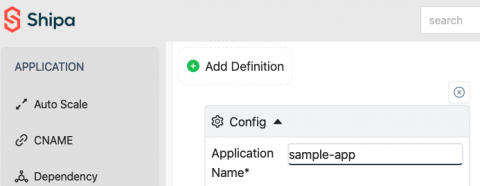
I love what we are building here at Shipa, and I couldn’t be more proud of all the great things the team is constantly delivering, but one thing I like is having personal projects. These help me keep up to date with technology and learn new things. I try to keep the investment in those projects at a minimum and under control. That goes across both the timing and the resources invested. My most recent project is related to the experience when defining cloud-native applications.

Stackify Earns SD Times 100: Best in Show for Performance Monitoring

Stackify earned top honors for the 4th year in a row from SD Times for Performance Monitoring. This year’s SD Times 100 looks at the best of the software development companies from how they performed in 2021 — a year like no other due to … Improve Your Code with Retrace APM Stackify’s APM tools are used by thousands of.NET, Java, PHP, Node.js, Python, & Ruby developers all over the world. Explore Retrace’s product features to learn more.

What Is JMX Monitoring?

The Java Management Extensions (JMX) framework is a well-known tool for any experienced Java developer. The purpose of the JMX framework is to simplify the management of local and remote Java applications while providing a user-friendly interface. The primary advantages of the JMX framework are that it’s highly reliable, scalable, and easy to configure. However, it’s also known for introducing the concept of MBeans, which unlocks the capacity for real-time Java application management.

Everything you need to know about cloud-native

Cloud technology, and applications running in the cloud, are becoming more and more common. With this rise in cloud computing, application development has needed to change as well, resulting in what can be called the cloud-native approach to software development. In this article, you will learn all about cloud-native technology and how cloud-native companies approach building their applications.

Optimize Resources Through Apache Spark Tuning (Part Two)

In part one of this two-part blog post, we began our deep dive into Apache Spark tuning to optimize resources. We looked at what is involved in executor and partition sizing, particularly choosing the number of partitions and choosing an executor size. After establishing some principles of optimization here, we ended by asking an important question: Is it really practical for all applications to be optimized? As our recent State of the Market report helped reveal, the answer is two-sided. The good news?