Operations | Monitoring | ITSM | DevOps | Cloud

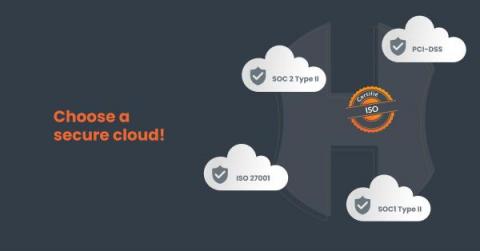
Cloud certifications for the security of your data

More and more companies around the world are using cloud solutions to run their applications, software or to store their data. But what about cloud compliance? The democratisation of the cloud is not surprising as it provides access to virtual data storage where companies no longer need to buy or maintain their own IT infrastructure. However, with cloud solutions, the security of user data should not be overlooked. There are cloud certifications and regulations that can help you in your choice.


The ABC of the Value Stream Mapping (VSM)

Value Stream Mapping (VSM) is a lean technique that has become deeply ingrained in the practices of IT service management (ITSM), DevOps, IT4IT, and Agile (Scrum, SAFe, Kanban). Over a century old, VSM is the best technique to obtain a customer-focused agreement on improving a cross-departmental flow of activities. It’s a simple concept but difficult to begin and sustain in practice. In this article, we will: Let’s begin!

System Administrators: Everything You Need to Know to Become a SysAdmin

Having a reliable IT infrastructure is crucial to the health of your company or organization. And while this is generally true, it’s doubly so in our current times, where practically everything is digital. So, who is the lucky one to make general decisions about how to run a system efficiently — and keep it going? That would be the System Administrator. But what does a SysAdmin actually do? That's what we'll answer here!

Networking 101: What is a VLAN?

The idea of a VLAN, or Virtual Local Area Network, is simple enough, right? It’s hard to imagine any work in a modern networking/IT space without having encountered, set up, or managed a VLAN. Well if that’s all you needed to know about VLANs, we’d be done here, but there’s a bit more to it. To cover our bases: In most modern networks the primary purpose of the LAN is to provide connectivity to a wider network, most notably the internet.

Why it's important to upgrade your Mattermost Server

Upgrading your Mattermost server involves a bit of research, preparation, and downtime. The pressure to keep your Mattermost instance healthy and reduce downtime for a core system within your organization can be intimidating. Recently, we worked with a handful of customers who were experiencing issues upgrading from Mattermost v5.37 and v5.39 to v6.x. Unfortunately, migration scripts were required to make significant database changes, and there was an issue in product performance.

Making Sure the Future of Federal Work Is Secure and Enjoyable - Why We're Partnering with NIST on Its Zero Trust Project

Last year, we announced our partnership with the National Cybersecurity Center of Excellence (NCCoE) at the National Institute of Standards and Technology (NIST) to work on the Implementing a Zero Trust Architecture project. After a year of collaboration with its industry partners, including Ivanti, NIST recently released its preliminary draft, NIST Cybersecurity Practice Guide SP 1800-35 Vol B, for public comment.

How to Overcome Datadog Log Management Challenges

Datadog has made a name for itself as a popular cloud-native application performance monitoring tool, measuring a system’s health and status based on the telemetry data it generates. This telemetry includes machine-generated data, such as logs, metrics and traces. Cloud based applications and infrastructure generate millions (even billions) of logs – and analyzing them can generate a wealth of insights for DevOps, security, product teams and more.

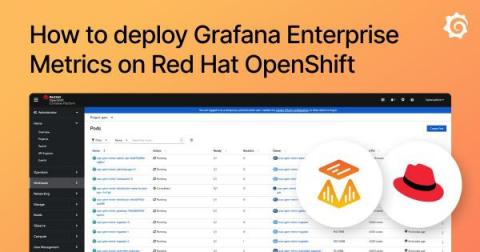
How to deploy Grafana Enterprise Metrics on Red Hat OpenShift

Here at Grafana Labs, we’re always looking for ways to provide our customers with a choice of platforms where they can run Grafana Enterprise Metrics (GEM). As part of that mission, we’re pleased to announce that we’ve added Red Hat OpenShift 4.x support to GEM. GEM, as you may know, is a leading enterprise metrics solution.

Code signing: securing against supply chain vulnerabilities

When creating an application, developers often rely on many different tools, programs, and people. This collection of agents and actors involved in the software development lifecycle (SDLC) is called the software supply chain. The software supply chain refers to anything that touches or influences applications during development, production, and deployment — including developers, dependencies, network interfaces, and DevOps practices.