Operations | Monitoring | ITSM | DevOps | Cloud

The Log4j Log4Shell vulnerability: Overview, detection, and remediation

On December 9, 2021, a critical vulnerability in the popular Log4j Java logging library was disclosed and nicknamed Log4Shell. The vulnerability is tracked as CVE-2021-44228 and is a remote code execution vulnerability that can give an attacker full control of any impacted system. In this blog post, we will: We will also look at how to leverage Datadog to protect your infrastructure and applications.
Log4j gets added to the code "wall of shame."

It seems that every few weeks, we are alerted to a new significant security issue within one of the plethoras of code elements that are widely used. The same pundits discuss the same range of concerns with open-sourced code each time. The list of “usual suspects” is long, and I know I could add at least 20 additional “reasons” to this list without thinking about it too hard. I’m not sure that open-sourced code is riskier than proprietary developed code. There I said it.

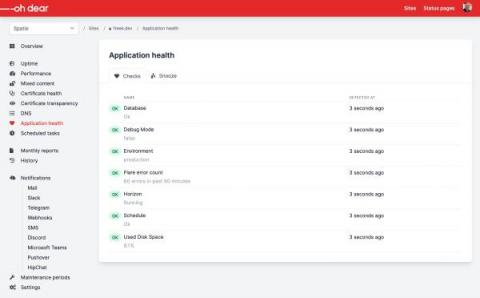
You can now monitor the health of your application and server

We're proud to announce that we have added a major new feature to Oh Dear: Application Health monitoring. Using Oh Dear, you can now monitor various aspects of your application and server. This way, you could get alerts when: You can monitor any aspect of your app that you want.

Get Started with the Public Beta for Unified Dashboards

During Logz.io’s ScaleUp 2021 user conference, we announced that Unified Dashboards were coming to you soon. And now it’s finally here for anyone to try during the Public Beta. Unified Dashboards will allow Logz.io customers to analyze and filter their logs, metrics, and traces side-by-side on a single monitoring dashboard. Check out our recent blog to learn about why we built Unified Dashboards and the value they bring to customers.

Podcast: Break Things on Purpose | Mandi Walls, DevOps Advocate at PagerDuty

Take a trip down memory lane with Mandi Walls, to chat about the many changes over the years in chaos engineering and other ares of tech. We’ve also got the new addition to Gremlin’s Developer Advocacy, Julie Gunderson who has joined Jason to chat with their mutual friend. Mandi talks about her previous work alongside Julie, but also the variegated nature of her background in operations and systems administration.

Bytecode transformations: The Android Gradle Plugin

This is the first part of a blog post series about bytecode transformations on Android. In this part we’ll cover different approaches to bytecode manipulation in Java as well as how to make it work with Android and the Android Gradle plugin. In the next two parts we’ll dive into the actual bytecode, bytecode instructions and how we can modify the bytecode and inject our own instructions, using Room as an example.

How to Find, Fix, and Prevent Node.js Memory Leaks

When your application starts to grow, one of the essential factors to consider while scaling is memory management. Poor memory management leads to memory leaks, thus affecting application performance. When the performance degrades, it will directly affect the business. So, it is essential to look out for and fix memory leaks in time. This blog post will look at what memory leaks are and how to avoid them in Node.js applications. Feel free to navigate the post using these links.