Operations | Monitoring | ITSM | DevOps | Cloud

Showcase dashboards securely and effortlessly with Skykit's offering in the Datadog Marketplace

For many organizations, making the most of the visibility Datadog offers into the health and performance of their infrastructure means displaying dashboards to stakeholders in various settings continuously and in real time. But the standard solutions for sharing dashboards to large-format displays can be onerous, involving sundry software and hardware and restrictive manual setups. These solutions can also pose significant security risks, since they tend to involve sharing passwords or devices.
Advanced Kubernetes interview questions

In the second part of our “Kubernetes interview questions” series, we have outlined ten questions to help those that want to take their Kubernetes knowledge to the next level. Read on to learn more about the difference between Kubernetes and Docker Swarm. We’ll also be covering how an organization can keep costs low using Kubernetes. If you missed part one, check it out here.

Reduce MTTR and improve UX with Grafana Enterprise: Inside Optum's observability stack

Among the 12 greatest stressors in life, six revolve around healthcare issues. From loss of a loved one to pregnancy and even retirement, these events often involve interactions with healthcare services — interactions that can either add to an individual’s stress or, ideally, help alleviate it.

Top 3 SQL Recovery & Repair Tools

Data collected by you is a valuable asset, however, mere collection or accumulation of data may not be enough to result in a positive and noticeable change within your firm. According to Forbes, besides collecting data it is critical to make intelligent and appropriate use of data. Data is not supposed to be a visible asset. As such data collection may not be up to the mark, particularly while manually handling the process.

Should you put all your trust in the tools?

My father worked with some of the very first computers ever imported to Italy. It was a time when a technician was a temple of excellence built on three pillars: on-the-field experience, a bag of technical manuals, and a fully-stocked toolbox. It was not uncommon that missing the right manual or the correct replacement part turned into a day-long trip from the customers’ site to headquarters and back.

Observability and Security Data Are Littering the Enterprise Like Lint Under The Couch Cushions

How enterprises store and split up observability and security data is a great analogy to how lint, spare change, and partially-eaten bags of popcorn end up under couch cushions. Or when you tell your kids to clean up the house when company is coming over and they stash their toys and your tools in various nooks and crannies.

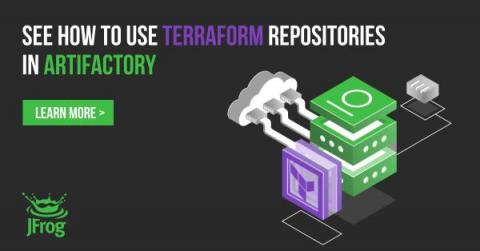
Tour Terraform Registries in Artifactory

Why should you keep Terraform module, provider, and backend registries in a binary repository manager like Artifactory? Because, like your builds, packages, and other artifacts, your Terraform files are a key part of your software supply chain. Terraform is a widely used open source infrastructure-as-code (IaC) software tool to manage the entire lifecycle of cloud service infrastructure.

Enhance the Value of Your Data With Mezmo's Observability Pipeline

Organizations of all sizes rely on their observability data to drive critical business decisions. Production Engineers across Development, ITOps, and Security use it to understand their systems better, respond to issues faster, and ultimately provide more performant and secure user experiences. But while the value of observability data is well understood, teams struggle to derive value from it.

Optimize Java Application Performance by Monitoring JVM Metrics

Although Java has been around for 27 years, enterprise applications still favor it as one of their preferred platforms. Java's functionality and programming flexibility increased concurrently with technological advancement, keeping it a useful language for more than 25 years. Outstanding examples of this progression include new garbage collection algorithms and memory management systems.

What Is MITRE D3FEND, and How Do You Use It?

MITRE is a world-renowned research organization that aims to help build a safer world. It is probably best known in the information security industry for being the organization behind the industry-standard CVE (Common Vulnerabilities and Exposures) list. Each entry on the list is supposed to include an explanation of how the vulnerability could be exploited. These attack vectors are tracked and defined in another well-known knowledge base called ATT&CK, which is also maintained by MITRE.