When working with containers in Kubernetes, it’s important to know what are the resources involved and how they are needed. Some processes will require more CPU or memory than others. Some are critical and should never be starved. Kubernetes defines Limits as the maximum amount of a resource to be used by a container. Requests, on the other hand, are the minimum guaranteed amount of a resource that is reserved for a container.
In this article, we will analyze what are the metrics for monitoring Kafka performance and why it is important to constantly monitor them. We will also look at the process of monitoring metrics for Kafka using Hosted Graphite by MetricFire. To learn more about MetricFire, book a demo with the MetricFire team or sign up for the free trial.
Many entrepreneurs hang their shingle without putting much thought into sales. They find out further down the road that sales is the heart of enterprise, and that it demands just as much preparation and planning as any other aspect of business. More often than not, an MSP who doesn’t plan ahead finds a great deal of difficulty growing once their referral business has inevitably run dry.
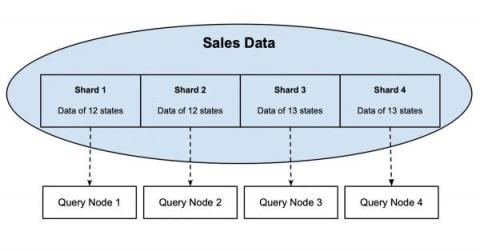
Partitioning can provide a number of benefits to a sharding system, including faster query execution. Let’s see how it works. In a previous post, I described a sharding system to scale throughput and performance for query and ingest workloads. In this post, I will introduce another common technique, partitioning, that provides further advantages in performance and management for a sharding database.
Over the course of two decades, Adform grew from a dream between friends huddled in a basement to a leading advertising tech platform powering more than 25,000 clients worldwide. Success brought external accolades, but it also created the need for internal innovation to support the company’s continued growth. In 2018, Adform was still operating in startup mode, which meant developers and teams cherry-picked the tools that worked best for them.
So you’ve set up a Security Orchestration, Automation and Response (SOAR) platform. You’re now ready to detect, respond to and remediate whichever threats cyberspace throws at you, right? Well, not necessarily. In order to deliver their maximum value, SOAR tools should be combined with playbooks, which can be used to drive SOAR systems and ensure that SOARs remediate threats as quickly as possible — in some cases, without even waiting on humans to respond.