Operations | Monitoring | ITSM | DevOps | Cloud

Falling Into the Stargate of Hidden Microservices Costs

Proponents of microservices claim more development velocity and reliability; more comprehensive test and vertical or horizontal scale with a container orchestrator; tons of flexibility around tool choice. They’re not wrong: When you build with a microservices architecture, you’re likely going to see cost improvements early in your software development life cycle (SDLC), driven mostly by the decoupling of services.
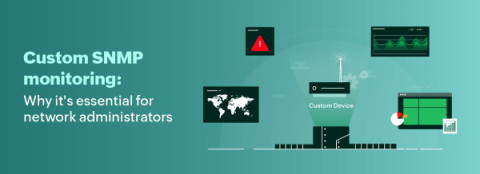
Monitoring diverse IT endpoints with custom SNMP monitoring

As our world becomes more connected, the number of network devices is growing at an unprecedented rate. This poses a challenge for network administrators who need to keep track of all the devices that are added to their network every day. Relying only on monitoring tools with a standard device repository may no longer be sufficient, leading to monitoring gaps and leaving the network vulnerable to potential security risks. Imagine that you have a device that appears as "unknown" in your monitoring tool.

More Historical Data

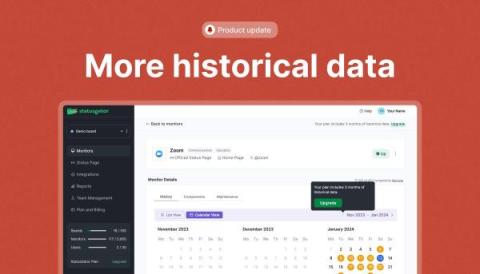
Our plans now include a specific timeframe of historical data that varies depending on the tier you choose. This change ensures that customers on our higher tier plans get even great visibility into the past performance of their vendors. Previously, historical data access was limited to your date of sign up. Existing customers automatically receive either their existing historical data limit OR the new limit, whichever is greater.

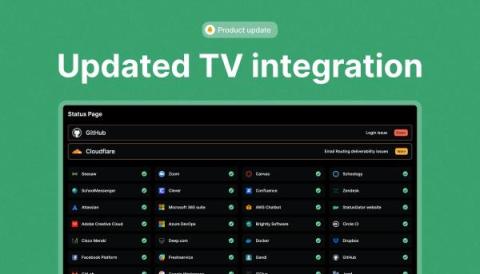
Updated TV Integration

Enhance your TV integration experience with customizable layouts. Choose from 2, 3, or 4 column options, giving you full control over how your monitors are displayed on the big screen. For those that haven’t seen it, the TV Integration is a simplified version of your status page formatted for display on a TV screen. Perfect for your IT office or NOC, the URL can simply be Chromecasted up to any screen.

Beyond the trace: Pinpointing performance culprits with continuous profiling and distributed tracing correlation

Observability goes beyond monitoring; it's about truly understanding your system. To achieve this comprehensive view, practitioners need a unified observability solution that natively combines insights from metrics, logs, traces, and crucially, continuous profiling. While metrics, logs, and traces offer valuable insights, they can't answer the all-important "why." Continuous profiling signals act as a magnifying glass, providing granular code visibility into the system's hidden complexities.

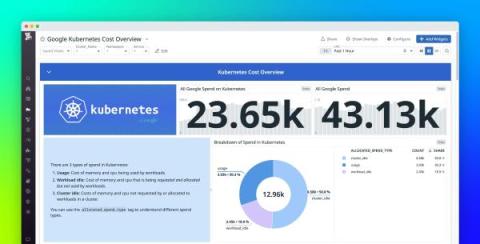
Empower engineers to take ownership of Google Cloud costs with Datadog

Google Cloud provides a wide range of services and tools to help engineering teams reduce the complexity of migrating and deploying applications in the cloud. As engineering teams work to improve the performance, reliability, and security of their applications, they also need to be conscious of cloud costs. But engineers often don’t have access to cost data, or they only see cost data in monthly reports.

Simplified routing in Grafana Alerting: Easy, secure, and powerful

With great power comes great… complexity? When we introduced Grafana Alerting a few years ago, it included a powerful routing feature that teams could use to send alerts to various contact points. Unfortunately, this functionality also came with a fair bit of complexity and an unfamiliar UX. This prevented many users from adopting it, but we’re still big believers in how it can help users.

New: Real-Time Remediation with Nexthink Flow's Event Trigger

Some issues can’t wait. When it comes to compliance or employee experience issues, time matters. Now with Nexthink Flow’s real-time event trigger, you can instantly trigger an automated workflow based off an event like an alert, employee login or application crash. When setting up a new workflow, you can select “Events” in the “Trigger” section and use a NQL query to identify the event to track.

How to Gain Visibility into Internet Performance

Continued cloud adoption is leading to an increasing reliance on internet services, and on a complex mix of external service providers and technologies to deliver those services. For network operations teams, these moves significantly reduce visibility into the performance of the underlying infrastructure that business services depend upon. In spite of this diminishing visibility and control, these teams remain responsible for network performance.