Operations | Monitoring | ITSM | DevOps | Cloud

Monitoring Shopify Websites: Strategies for Optimizing Conversion Rates

After a year in business consistently meeting revenue benchmarks and audience cultivation goals, it’s time to reap the fruits of your labor by launching the store’s first new product line. You’ve spent the last couple of months preparing for this day: stocking your inventory, cooking up ad creative for your social feeds, and perfecting marketing email subject lines. Now it’s time to sit back and watch those sales pour in—except they don’t.

Making Sense of Your IoT data with AWS and MetricFire

The Internet of Things (IoT) is all the rage these days, and for good reason. It lets us connect all sorts of devices to the internet, opening up a world of possibilities. However, managing all those devices and the data they generate can be a challenge. That's where AWS and MetricFire come in. AWS offers a robust suite of cloud services called AWS IoT that makes it easy to develop and manage IoT applications. MetricFire is a platform that helps you monitor your AWS services, including your IoT devices.

Microsoft Teams Slowness: How to Solve Microsoft Teams Slow Performance

Welcome to our guide on tackling one of the most frustrating issues in modern collaboration: Microsoft Teams slowness. Whether you're a remote worker trying to stay productive or an IT professional ensuring smooth operations for your business, dealing with Teams' slow performance can be a significant hurdle. In this article, we'll delve into effective troubleshooting strategies tailored for both personal users and IT pros.

Go Beyond with Autonomic IT to Drive the Autonomous Business

Go Beyond with Autonomic IT to Drive the Autonomous Business IT infrastructures have grown prohibitively complex. But the full realization of AIOps – Autonomic IT – will liberate the IT function and propel businesses forward towards elevated performance and greater potential.

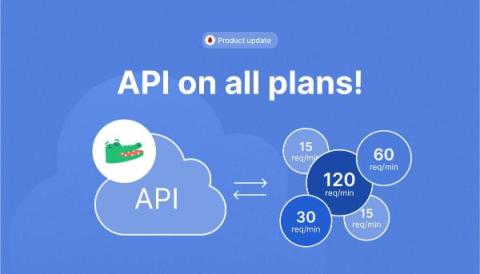
Status data API: Now available to all!

We’ve just opened up the StatusGator API to all users on all plans — even the Free plan. Previously, our REST API was a feature only of our higher level plans. But we’ve opened up the API to all plans to allow more people to take advantage of our status data. The API limits vary by plan by are generous enough to employer real-time dashboards and other uses.

What Is Website Outage?

Website outages can be frustrating and costly for both users and businesses. When a website becomes partly or fully unavailable, it can lead to lost revenue, damaged reputation, and lower search engine rankings. In this article, we'll look at what website outages are, their common causes, and how they can negatively impact users, businesses, and SEO. We'll also talk about ways to check for outages and reduce their occurrence.

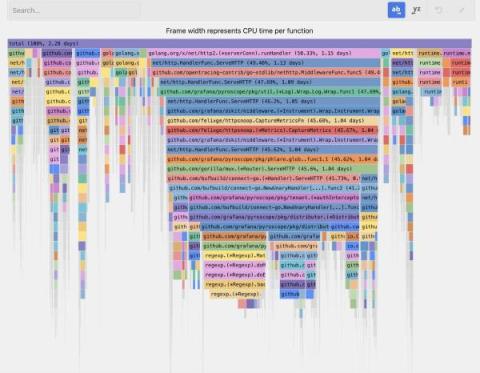
AI-powered insights for continuous profiling: introducing Flame graph AI in Grafana Cloud

Like many in the observability space, we see a lot of potential in harnessing AI to enhance the developer experience. As we continue to evolve and expand our observability platform, we strive to develop features that not only solve complex problems, but make it easier to access and derive value from tools like Grafana Pyroscope.

Tackling the Unsustainable Skills Challenge in Cybersecurity and Observability

This is the third and final post in a series of blog posts about the disconnect between modern IT and security teams and the vendors they’re forced to work with. If you’re looking for the first and second posts, you can find them here and here.

5 Top Kubernetes Observability Challenges and Solutions

Observability in IT refers to the ability to measure a system's internal functioning by studying its signals from the outside. Modern IT observability is achieved through three kinds of telemetry: metrics, traces, and logs. Metrics aggregate events to gauge a system’s current state. Tracing tracks the progress of each transaction to not only measure performance but also debug the problem. On the other hand, logs record each event, which can help during troubleshooting.

Major Improvements For Linux Users In Tracealyzer v4.9

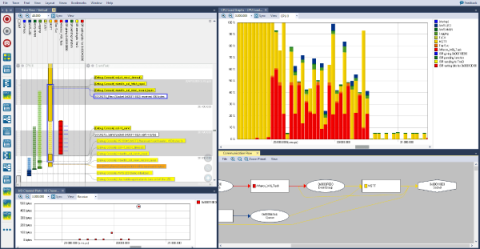
Installation on Linux has been greatly simplified in the upcoming Tracealyzer v4.9. The installation package now includes everything needed to run the software. Linux users no longer need to install dependencies like Mono or libgconf. Instead, a native Linux binary is provided (for x86-64) with the Mono runtime integrated. Most other dependencies have been replaced or removed. You are up and running in a few minutes. We have also spent a lot of time improving the overall user experience on Linux.