Operations | Monitoring | ITSM | DevOps | Cloud

IT Event Console: Centralize Logs, Correlate Alerts, and Detect Incidents

When you’re just starting out, you might picture yourself managing your IT infrastructure like Tom Cruise in Minority Report—key information projected in front of you, predicting events before they happen, controlling everything at the speed of thought with cinematic gestures on some kind of holographic computer.
Introducing DNS Monitoring - Stay Ahead of DNS Issues Before They Impact You

We’re excited to announce a powerful new addition to your monitoring toolkit: DNS Monitoring is now available on UptimeRobot! DNS (Domain Name System) is a core component of internet functionality. When DNS records are misconfigured, hijacked, or simply expire, they can lead to serious outages, broken email services, or even security risks. That’s why we’ve introduced DNS Monitoring – to help you stay in control of your domain’s health at all times.

LangChain Observability: From Zero to Production in 10 Minutes

LangChain apps are powerful, but they’re not easy to monitor. A single request might pass through an LLM, a vector store, external APIs, and a custom chain of tools. And when something slows down or silently fails, debugging is often guesswork. In one instance, a developer ended up with an unexpected $30,000 OpenAI bill, with no visibility into what triggered it. This blog shows how to avoid that using OpenTelemetry and LangSmith. With this setup, you’ll be able to.

Observability isn't about the tool. It's about the truth

An enterprise client reports latency. Your dashboards say everything is fine. They blame you. You blame them. Nobody can prove it either way. This is where most monitoring efforts hit a wall. Too often, the conversation gets stuck on dashboards and tools instead of the one thing that really matters: truth. Observability isn’t about collecting metrics or building pretty dashboards.

How to Monitor MPLS Networks

If you manage an enterprise network, then you’ve definitely come across MPLS. Although many businesses rely on MPLS technology for large, high performing networks, they can suffer from network problems, like network congestion, that can impact user experience. Monitoring MPLS using a Network Monitoring tool is key to identifying and solving network issues that impact MPLS performance.
Sponsored Post

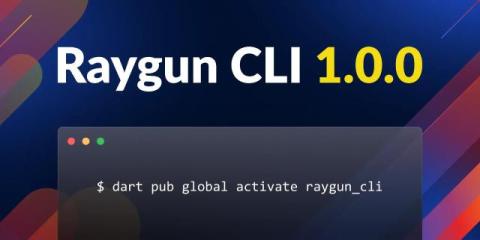
Introducing Raygun CLI: Level-up your error tracking workflow

Raygun CLI is a powerful command-line interface tool designed to enhance the developer experience when working with Raygun's error tracking and performance monitoring platform. With this tool, we bring Raygun's features directly to your terminal, making it easier to integrate some important elements of Raygun Crash Reporting and error tracking into your development and CI/CD workflow. We are excited to announce the release of version 1.0.0 of Raygun CLI.

Coralogix launches OpenAPI endpoints

Observability is about much more than dashboards and alerts. Extensible platforms that integrate into the user’s tech stack are fundamental parts of a great developer experience. This is why Coralogix has supported gRPC APIs for account management, data ingress & query, alert definition, dashboard creation, permissions management and more. Today, Coralogix adds a new integration, with the launch of OpenAPI endpoints for all existing functionality.

Introducing the Coralogix Operator for Kubernetes

As organizations begin to scale their observability strategy, point and click methods of management become increasingly unworkable. This is why Coralogix has now fully released the Coralogix Operator for Kubernetes. Kubernetes operators are control loops that allow users to declare their desired state in their Kubernetes clusters, and the operator is responsible for resolving this state.

MCP Observability with OpenTelemetry

2025 has truly been the year of Agentic AI, with MCP (Model Context Protocol) emerging as one of its flashy and most talked-about innovations. While many products have seamlessly integrated MCP servers into their systems, these servers are increasingly being labelled as black boxes, opaque components that handle critical tasks but offer little visibility into what's happening under the hood. We prompt an agent, a tool gets invoked, and a response is generated. But what really happens in between?