Operations | Monitoring | ITSM | DevOps | Cloud

Kubernetes observability tutorial: K8s cluster setup and demo app deployment

The easiest way to get the Elastic Stack up and running for this tutorial, is to spin up a 14-day free trial of our Elasticsearch Service on Elastic Cloud. A few clicks (no credit cards) and you’ll have your cluster up and running. Or if you prefer, download the Elastic Stack and install locally. All of the instructions in this tutorial can be easily amended to work with a standalone Elasticsearch cluster on your own hardware.


Kubernetes observability tutorial: Log monitoring and analysis

Kubernetes has emerged the de facto container orchestration technology, and an integral technology in the cloud native movement. Cloud native brings speed, elasticity, and agility to software development, but also increases the complexity — with hundreds of microservices on thousands (or millions) of containers, running in ephemeral and disposable pods. Monitoring such a complex, distributed, transient system is challenging, and at the same time very critical.

A Next Step Beyond Test Driven Development

The most successful software development movement of my lifetime is probably test-driven development or TDD. With TDD, requirements are turned into very specific test cases, then the code is improved so the tests pass. You know it, you probably use it; and this practice has helped our entire industry level up at code quality. But it’s time to take a step beyond TDD in order to write better software that actually runs well in production. That step is observability driven development.

DNS Monitoring 101: Verify DNS Mapping

This Tip of the Day is the first in a three-part series on Domain Name System (DNS) monitoring. The Domain Name System is often described as “the phonebook of the Internet.” While humans access the Internet via domain names such as npr.org or bbc.com, web browsers interact via Internet Protocol (IP) addresses. DNS translates domain names to IP addresses so that browsers know which Internet resources to load.

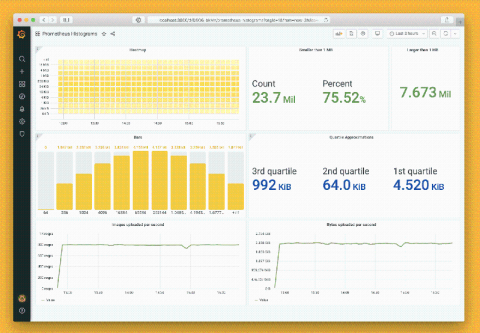
How to visualize Prometheus histograms in Grafana

Do you have a Prometheus histogram and have you asked yourself how to visualize that histogram in Grafana? You’re not alone. Here, we will show you how it’s done. This post assumes you already have a basic understanding of Prometheus and Grafana and it will look at Prometheus histograms from the perspective of Grafana 7.0.

Future proof your VMware monitoring in SCOM

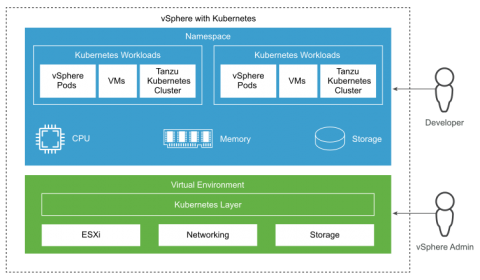
VMware vSphere 7, the new generation of vSphere was released in April 2020. This major new release brings a massive improvement in the work experience of vSphere administrators. If you work with VMware you probably noticed many exciting new features released in vSphere 7. ​ Many of them are a bit out-of-scope for this blog post as we will primarily focus on monitoring. If you want to learn all about the latest VMware vSphere 7 release, I recommend checking out their blog.

Webinar Highlights: How EnerKey Uses InfluxDB and Azure to Save Customers Millions

EnerKey’s CTO Martti Kontula recently presented on how EnerKey uses InfluxDB Enterprise and Microsoft Azure to power their IoT platform which enables their customers to save millions of euros! Their analytics platform uses sensor data to detect energy usage fluctuations triggered by weather and geospatial data. If you missed attending the live session, we have shared the recording and the slides for everyone to review and watch at your leisure.

Your services are backed by SLAs. What's backing your SLAs?

You’ve made promises to your customers and end users, quantifying them in SLAs (service-level agreements) to instill confidence that those commitments will be honored. SLAs give users peace of mind. But what about your peace of mind? How can you guarantee your hybrid infrastructure and applications are continuously meeting or exceeding those SLAs? I’m going to explore how to ensure SLAs are met to maintain productivity and protect revenue.

API Management Trends 2020

APIs revolutionized the digital landscape by introducing a new level of programming flexibility and ease of integration. Organizations turned to APIs to push innovation and creating an API economy. It was a key driver in the eCommerce industry, businesses like eBay leveraged APIs to generate additional revenue. eBay introduced APIs twenty years ago providing developers a platform to build applications that improved businesses. Today, eBay’s APIs generate over a billion dollars in business.

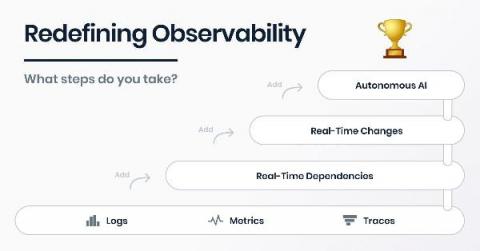
Observability Redefined: 3 steps to improve your IT infrastructure

Are you already applying IT observability to keep up with rapid changes in your IT operations landscape? Currently, the fast adoption of new infrastructures, including hybrid clouds, containers, and microservices, challenges the market. As organizations move towards these highly dynamic architectures, the requirements for traditional IT monitoring change dramatically. More data keeps on coming, and having the time and skill to keep up with this ongoing stream seems to get harder and harder.