Operations | Monitoring | ITSM | DevOps | Cloud

Introduction to cron job monitoring with Healthchecks

Software teams use cron jobs to handle many important tasks like database backups and maintenance scripts. Cron jobs make sure that your applications are behaving as they should, but cron job failures are often silent and not noticed until the problem becomes worse. In this guide, we will learn how to stay aware about cron job failures by using Healthchecks.

Benchmarking Grafana Enterprise Metrics for horizontally scaling Prometheus up to 500 million active series

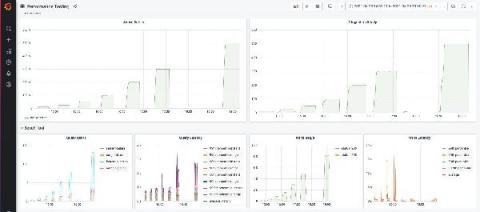
Since we launched Grafana Enterprise Metrics (GEM), our self-hosted Prometheus service, last year, we’ve seen customers run it at great scale. We have clusters with more than 100 million metrics, and GEM’s new scalable compactor can handle an estimated 650 million active series. Still, we wanted to run performance tests that would more definitively show GEM’s horizontal scalability and allow us to get more accurate TCO estimates.

9 Best Cloud Logging Services for Log Management, Analysis, Monitoring & More [2021 Comparison]

Log management stopped being a very simple operation quite some time ago. Long gone are the “good old days” when you could log into the machine, check the logs, and grep for the interesting parts. Right now things are better. With the observability tools that are now a part of our everyday lives, we can easily troubleshoot without the need to connect to servers at all. With the right tools, we can even predict potential issues and be alerted at the same time an incident happens.

GKE operations magic: From an alert to resolution in 5 steps

As applications move from monolithic architectures to microservices-based architectures, DevOps and Site Reliability Engineering (SRE) teams face new operational challenges. Microservices are updated constantly with new features and resource managers/schedulers (like Kubernetes and GKE) can add/remove containers in response to changing workloads. The old way of creating alerts based on learned behaviors of your monolithic applications will not work with microservices applications.

What's Changed in VMware vSphere 7 Update 2: All You Need to Know

VMware has recently released vSphere 7 Update 2, and there is a lot of new stuff to look out for. vSphere, VMware’s server virtualization product, has been an industry favorite for a long time. The vSphere 7 came out in April 2020, and this is so far the second update to it, hence the name. When you look at the changes they’ve rolled out, you’ll know that they are really focusing on some key areas. As a result, VMware infrastructure is getting pretty solid and modern.

Top 7 Tools for Adding Web Forms to Static Websites

The power of the Internet and the World Wide Web is known to everyone. Within a few years after its inception, businesses started to take advantage of all the facilities in features. And within no time, e-commerce became prominent as a new way to do business. Nowadays, it is the dominant way any company or business can reach its customers across the globe with a website.

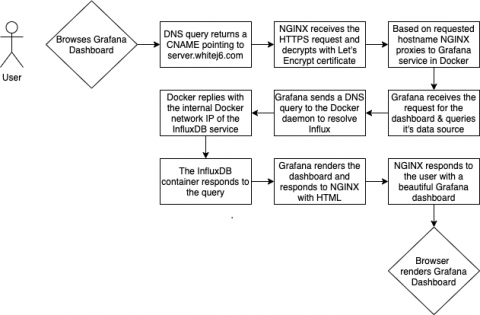
Deploying Services with Docker, NGINX, Route 53 & Let's Encrypt

Docker is a power tool for deploying applications or services, and there are numerous Docker orchestration tools available that can help to simplify the management of the deployed containers. But what if you are wanting to deploy a small number of services and not wanting to undertake setting up and managing another application stack just to run a handful of containers. I will cover how I deployed a handful of services on a single Docker host.

How to Optimize Website Performance

In a 2019 study from Milliseconds Make Millions by Fifty-Five and shared on Google’s official blog found several interesting insights on small speed increases. 37 brands qualified for study, after qualitative checks, with speed data measured via Google Lighthouse and aggregated against each brand’s Web analytics. The study targeted four key speed metrics. The results were fed into a Logarithmic Regression model to extract meaning.