Operations | Monitoring | ITSM | DevOps | Cloud

Configure Cribl LogStream to Avoid Data Loss With Persistent Queuing

Preventing data loss for data in motion is a challenge that LogStream Persistent Queues (PQ) can help prevent when the downstream Destination is unreachable. In this blog post, we’ll talk about how to configure and calculate PQ sizing to avoid disruption while the Destination is unreachable for few minutes or a few hours. The example follows a real-world architecture, in which we have.

Why cloud native requires a holistic approach to security and observability

Like any great technology, the interest in and adoption of Kubernetes (an excellent way to orchestrate your workloads, by the way) took off as cloud native and containerization grew in popularity. With that came a lot of confusion. Everyone was using Kubernetes to move their workloads, but as they went through their journey to deployment, they weren’t thinking about security until they got to production.

How to measure the performance of a website

If you’re a person who works from home, you almost certainly have to deal with occasional internet connection issues. More often than complete outages, you’re likely dealing with occasional slowness. And you know from experience that any one of dozens of devices and services along the path can cause latency.

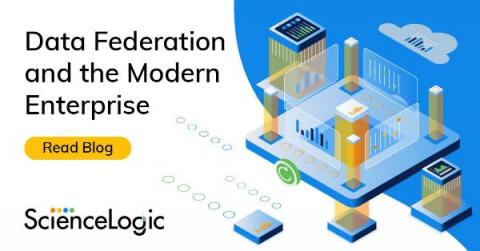
Data Federation and the Modern Enterprise

In our increasingly hyper-connected, data-dependent world, it can be difficult to keep track of where resources are, how to access them, and how to put data assets to work to run a more efficient and reliable enterprise. Traditional approaches to IT operations analytics are becoming outmoded as the sources and types of data grow more mobile, ephemeral, diverse and distributed.

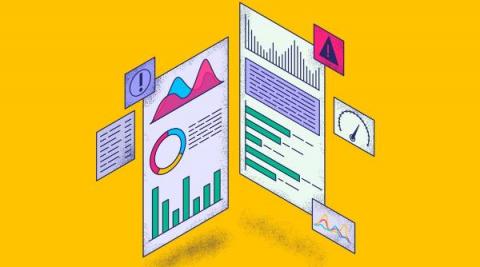
Comparing REST and GraphQL Monitoring Techniques

Maintaining an endpoint, especially a customer-facing one, requires constant monitoring, whether using REST or GraphQL. As the industry has looked for solutions to build a more adaptive endpoint technology, it is also a must to monitor these endpoints. GraphQL and REST are two different technologies that allow user-facing clients to link to databases and platform logic. Both GraphQL and REST include monitoring techniques.

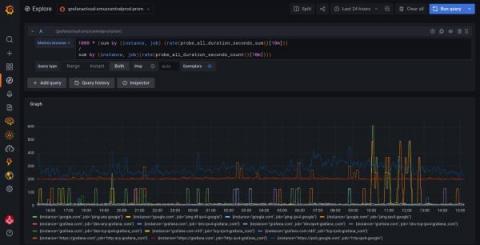
Top 5 user-requested synthetic monitoring alerts in Grafana Cloud

We often hear from Grafana Cloud users who are asking for guidelines on how to write better alerts on synthetic monitoring metrics and get notified when synthetic monitoring detects a problem. We already ship a predefined alert in Grafana Cloud synthetic monitoring. A predefined alert that we ship is alerting on the probe_all_success_sum metric and makes use of the alert sensitivity config to create multiple Grafana Cloud alerting rules. Check out synthetic monitoring alerting docs for details.

How Automated Application Monitoring Saves Time and Money

With the increase in demand for technology and quality assurance, companies are looking to improve their products day by day. For many, time and workforce are limited, so companies are interested in solutions that automate their day-to-day work. Whether developing software or testing it, almost every part of application lifecycle management is reliable on the human workforce. But some parts like monitoring, tracking, and alerting can be automated using some latest software.

2022: Let's do this!

Happy new year! 🎉 It's 2022, and even though not much has changed in the past year, I'm happy to know that Monitive is running smoothly and brings value to our customers. For the first quarter of 2022 our main focus is fixing issues, either bugs we know of or small tweaks that make everyone's lives better. There are some feature requests in our backlog that we're jumping on starting February, and also a few surprise updates that are in the works and will be launched when they're ready.

Monitor Azure SQL databases with Datadog

In Part 2 of this series, we showed you how to monitor Azure SQL Database metrics and logs using the Azure platform. In this post, we will look at how you can use Datadog to monitor your Azure SQL databases alongside other technologies in your infrastructure. Datadog provides turn-key integrations for Azure along with more than 500 other technologies, enabling you to track long-term performance trends across all systems in your infrastructure, not just your SQL databases.

Tools for collecting Azure SQL Database data

In Part 1 of this series, we discussed key metrics for monitoring Microsoft Azure SQL databases. We also looked at how your database resource and audit logs complement metrics to provide more insight into database performance, activity, and security. In this post, we’ll show you how to collect metrics and logs from your database instances and monitor them with Azure’s monitoring and reporting tools.