Operations | Monitoring | ITSM | DevOps | Cloud

Accelerate incident investigations with Log Anomaly Detection

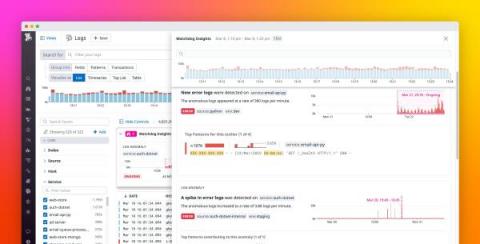
Modern DevOps teams that run dynamic, ephemeral environments (e.g., serverless) often struggle to keep up with the ever-increasing volume of logs, making it even more difficult to ensure that engineers can effectively troubleshoot incidents. During an incident, the trial-and-error process of finding and confirming which logs are relevant to your investigation can be time consuming and laborious. This results in employee frustration, degraded performance for customers, and lost revenue.

NoSQL Database Monitoring with DX UIM

A NoSQL database provides a mechanism for data storage and retrieval, without using the tabular relations associated with relational databases. Originally referred to as "non-SQL" or "non-relational" databases, NoSQL databases are increasingly used in big data and real-time web application environments. NoSQL systems are also sometimes called “Not only SQL” to emphasize that they may support SQL-like query languages or sit alongside SQL databases in polyglot-persistent architectures.

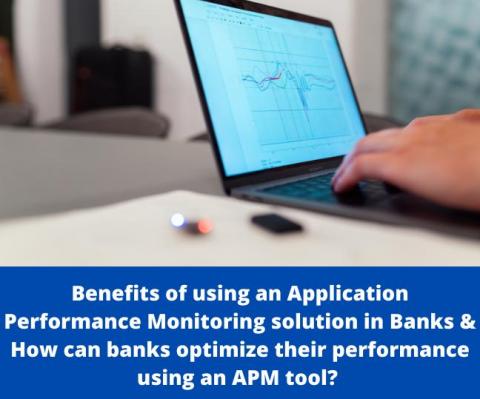
Benefits of using an Application Performance Monitoring solution in Banks & How can banks optimize their performance using an APM tool?

Monitoring business-critical applications is just as vital as deploying them since their performance directly impacts your ability to meet business goals. When it comes to the banking industry, ensuring superior application performance of applications is crucial to enabling smooth banking operations. But it’s also complex since banks deploy interconnected applications across on-premise and cloud.

How to Surface Relevant Performance Data

Your applications most likely consist of multiple components. These components could be written in different languages, with each individually instrumented with Sentry’s SDK. The goal of our tracing solution is to make sure developers get a full picture of the data captured within their tech stack. Tracing allows you to follow a request from the frontend all the way to your backend application and back.

How to Use OpenTelemetry to Troubleshoot a Serverless Environment with StackState

Losing track of communication between applications or code has become a problem with the tech world growing more into supporting Serverless cloud architectures and allowing the developer to maintain, upgrade and update these services. One might say that services and code are becoming more loosely coupled, allowing code to run and execute in silos. Let's take an AWS Lambda function as an example.

Expert Series: Large MSP Was First to Upgrade to DX UIM 20.4

A NoSQL database provides a mechanism for data storage and retrieval, without using the tabular relations associated with relational databases. Originally referred to as "non-SQL" or "non-relational" databases, NoSQL databases are increasingly used in big data and real-time web application environments. NoSQL systems are also sometimes called “Not only SQL” to emphasize that they may support SQL-like query languages or sit alongside SQL databases in polyglot-persistent architectures.

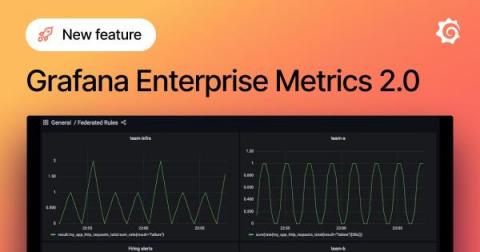
New in Grafana Enterprise Metrics 2.0: Cross-tenant alerting and recording rules

On the heels of launching our new open source TSDB Grafana Mimir, we are excited to introduce Grafana Enterprise Metrics 2.0. GEM 2.0 is built on top of Grafana Mimir 2.0, our easy-to-operate, high-scale database which we’ve shown can handle upwards of 1 billion active series. That means that GEM 2.0 inherits all of the highlights of Mimir, including easy deployment, native multi-tenancy, high availability, durable long-term metrics storage, and exceptional query performance.

Use Service Design in Operations Management to Enhance Security

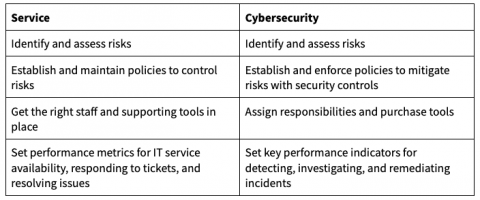
As an IT operations manager, you spend a lot of your time mitigating service outages and service level risks. You worked diligently to get the right people, products, processes, and partners in place to meet your goals. You managed to ensure continued uptime. You’ve reduced the number of tickets and the cost per ticket. And for your efforts, you’re rewarded with managing your company’s cybersecurity program. The problem? You’re not a security specialist.

Managing Time Series Data in Industrial IoT

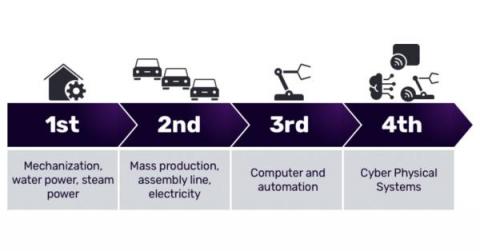
The industrial revolution was a watershed period in human history. The shift from piecemeal, cottage-industry work to mechanized manufacturing transformed the way humans work. Since the 18th century, successive waves of innovation, such as the assembly line and the computer, continued to alter and change the nature of manufacturing. Today, we find ourselves in the midst of another industrial transformation.

Tackling Your Carbon Footprint with the Sustainability Toolkit for Splunk

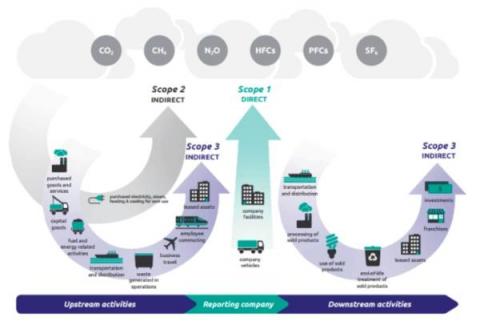
Simple questions can be overwhelming and not knowing the answer after a mouse click is no longer an option: Sustainability is top of mind for organizations across all verticals and Splunk can help with the power of data. Our upcoming Sustainability Toolkit based on the Splunk platform equips organizations with capabilities to gain deep insights into their carbon footprint and as such empowers them to take the necessary actions towards their carbon neutrality goals.