Operations | Monitoring | ITSM | DevOps | Cloud

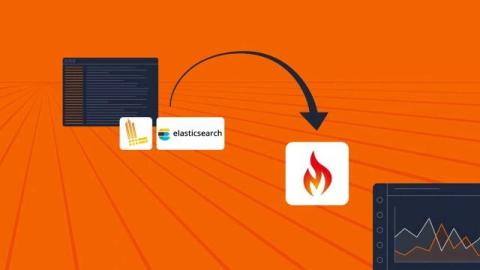
Visualize Logs Alongside Metrics: Complete Observability Elasticsearch Performance

Elasticsearch is a distributed search and analytics engine that powers everything from log management platforms to e-commerce search bars. It excels at indexing and retrieving large volumes of data quickly, but like any complex system it can slow down under heavy load or inefficient queries.

Observability and Monitoring Governance (Part 1 of 4)

In contrast to the many flavors of governance used for IT, such as data governance, audit and compliance, and governance and security, IT monitoring governance lacks a definition in many organizations. This is true even as teams have decades of experience monitoring the health, performance, and availability of applications, infrastructures, networks, and user experience. Good monitoring governance “just sort of happens—naturally, organically.” Not exactly!

Honeycomb MCP Is Now In GA With Support for BubbleUp, Heatmaps, and Histograms

If you’ve been following my public journey with LLMs this year, it probably won’t surprise you to learn that this blog post is an announcement about the general availability of Honeycomb’s hosted MCP server. I want to share a few updates about what’s new in the GA release, discuss some interesting learnings from building it, and share examples of how we’re using MCP internally. First: if you're still in the dark about MCP and AI agents, go read the earlier blogs I linked.

Software-Defined Healthcare: Modernizing Through DevOps, Observability & AIOps

Healthcare delivery is undergoing a transformation unlike any other. Digital systems now shape how physicians deliver care, how practices are managed, and how patients experience the health system. From cloud-native platforms to intelligent automation, the shift toward software-defined healthcare is revolutionizing clinical operations. At the heart of this change are three critical enablers: DevOps, Observability, and AIOps. Together, they form the backbone of a modern healthcare IT environment, driving resilience, agility, and patient-centered outcomes.

SvelteKit observability just got 10x better, and we're here for it

The Svelte Team recently announced full observability and tracing support for SvelteKit! This is great news for SvelteKit and Sentry users, since Sentry is already compatible with the new feature! In addition, this is even greater news for the JavaScript ecosystem as a whole because SvelteKit just became the first ESM-based meta-framework to support instrumentation and tracing out of the box.

Sharpening My React Hooks Knowledge With ChatGPT

I’m a product engineer at Honeycomb. While my work spans the stack, I’m currently focused on deepening my frontend expertise. To support this, I’ve been using ChatGPT as a study assistant. It’s helped me break down complex topics with clear explanations, real-world examples, and—critically—interactive practice. The most effective formats I’ve found.

The Fourth Pillar of Observability

Your application is only as reliable as the infrastructure it runs on. Most commonly, that means Kubernetes is doing the job by managing fleets of containers, scaling services on demand, and keeping workloads distributed across nodes. Traditional dashboards weren’t built to scale with this reality. They give you snapshots of raw metrics. They don’t scale to multi-cluster environments. They don’t map relationships between resources.

Bringing Observability to Claude Code: OpenTelemetry in Action

AI coding assistants like Claude Code are becoming core parts of modern development workflows. But as with any powerful tool, the question quickly arises: how do we measure and monitor its usage? Without proper visibility, it’s hard to understand adoption, performance, and the real value Claude brings to engineering teams. For leaders and platform engineers, that lack of observability can mean flying blind when it comes to understanding ROI, productivity gains, or system reliability.

Actionable insights into the end-user experience: an overview of Grafana Cloud Frontend Observability dashboards

One of the biggest challenges in frontend development is identifying when and why users encounter performance issues, whether it’s slow page loads, JavaScript errors, or failed HTTP requests. With Grafana Cloud Frontend Observability — a hosted service for real user monitoring (RUM) — you get immediate, clear, and actionable insights into the end-user experience of your web applications.