Operations | Monitoring | ITSM | DevOps | Cloud

Paving the way for a new era: Mezmo's Active Telemetry

The world of software development has fundamentally changed. We've moved from monthly releases to continuous delivery measured in minutes, and the rise of AI means velocity is no longer just a goal—it's a requirement for survival. But this relentless speed has exposed a critical flaw in how we approach observability. The industry relies on a "store first, ask questions later" model where you collect every log, metric, and trace, and then hope to find the root cause when something breaks.
OpenMetrics vs OpenTelemetry - A guide on understanding these two specifications

OpenMetrics and OpenTelemetry are popular standards for instrumenting cloud-native applications. Both projects are part of the Cloud Native Computing Foundation (CNCF) and aim to simplify how we generate, collect and monitor services in a modern cloud-native distributed application environment. Let's have a look at how both the standards are aiming to help solve the observability conundrum.

How to Become an SRE Engineer

Site Reliability Engineering has emerged as one of the most sought-after careers in tech, combining software engineering expertise with operational excellence. SRE engineers ensure that critical systems remain reliable, scalable, and performant while enabling rapid feature development. With the global SRE job market projected to grow by over 25% in 2025, skilled professionals in this field command competitive salaries and enjoy diverse career opportunities across industries.

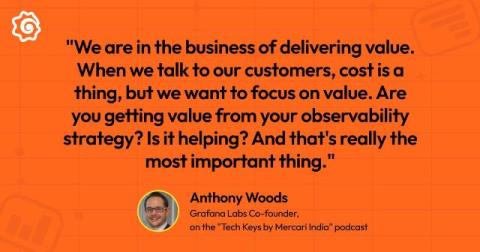
Grafana Labs Co-founder Woods: Market maturity, OpenTelemetry, and AI are reshaping observability

As organizations navigate increasingly complex tech environments, unified observability practices have become essential. That was one of the main takeaways from Grafana Labs Co-founder Anthony Woods’ recent appearance on “Tech Keys by by Mercari India,” a podcast hosted by Vaibhav Khurana, Head of Platform Engineering at Mercari India.

Monitor your data pipelines with Airflow lineage

In complex data pipelines with dozens of jobs and intermediary datasets, it can be difficult to effectively monitor how data travels and changes through various steps. When tracking issues in these pipelines, you need visibility into upstream components where the root cause may originate from, as well as downstream datasets and consumers of data that may be experiencing further impacts.

Kubernetes Observability: Your Q&A Guide to Calico Whisker

Getting the most out of Whisker requires understanding its inner workings and this guide is designed to help you master this exciting tool with support from the Calico community. We’ve compiled the most frequently asked questions from our community Slack, support conversations, and CalicoCon sessions. This Q&A covers everything from initial installation tips and version requirements to advanced topics like filtering flow logs and integrating with Goldmane, the powerful API that underpins Whisker.

How to Responsibly and Effectively Contribute to Open Source Using AI

With the influx of AI tooling, it’s never been easier to contribute to open source communities. These tools are capable of gathering context quickly, “understanding” repositories faster than ever before. They provide instant summaries about repositories that, previously, would have meant reading lines and lines of code. They can fix bugs in programming languages you don’t know, and ultimately allow more contributors to get involved, which (almost) every open source project wants.

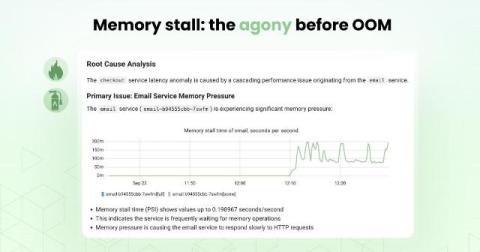
Memory stall: the agony before OOM

When we set a memory limit for a container, the expectation is simple: if the app leaks memory, the OOM killer steps in, the container dies, Kubernetes restarts it, done. But reality is messier. As a container gets close to its memory limit, allocations don’t just fail instantly. They get slower. The kernel tries to reclaim memory inside the cgroup, and that takes time. Instead of being killed right away, your app just crawls.

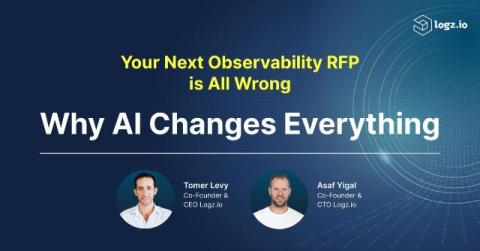
Your Next Observability RFP is All Wrong. Why AI Changes Everything

AI-first observability addresses two of the most pressing troubleshooting challenges: complex IT environments and AI-generated code. But understanding how to implement AI in a way that brings ROI, requires cutting through the hype and maintaining realistic expectations, while keeping a forward-thinking vision. In this blog post, we bring practical tips for including AI in your next observability RFP. The article is based on a webinar held with Logz.io founders, CEO Tomer Levy and CTO Asaf Yigal.