Operations | Monitoring | ITSM | DevOps | Cloud

AlOps - Laying a Strong Foundation with Full-Stack Observability

It is fair to say that AIOps is much more than just a catchy tagline; in fact, it is now a fundamental aspect of every enterprise looking to manage a modern, cloud-native architecture along with a distributed system. As AIOps becomes more widely adopted and organizations start expanding, the amount of logs, metrics and traces becomes too much for role-based tracking and monitoring tools. This is the moment in which full-stack observability tools are needed, providing valuable data that observability AIOps engines rely on for their predictive, proactive, and performance issue detection.


How to Monitor RabbitMQ

A queue quietly fills up overnight. Memory hits the configured watermark and RabbitMQ blocks all publishers. Your entire message pipeline freezes, and you discover the problem when users start complaining. This scenario repeats across thousands of production systems because teams don't monitor RabbitMQ properly. The broker exposes comprehensive metrics, but most engineers don't know which ones predict failures or how to track them.

What is Network Observability vs. Network Monitoring?

Network observability may be seen as a newer term in the world of networking, but it has become critical for managing modern distributed networks. As networks grow more complex with cloud services, remote workers, and distributed applications, traditional network monitoring approaches no longer provide sufficient visibility into network health and performance.

Expanding Access, Not Risk: Using the Read-Only Role in Honeycomb Teams

Observability works best when everyone who needs visibility can get it without the risk of unintentional changes. Honeycomb’s role-based access control system helps teams strike that balance with a selection of Owner, Member, and Read-Only member roles. This control gives teams more flexibility in how they share access across their organization, helping you scale visibility safely without sacrificing control.

Elastic named a Leader in the IDC MarketScape: Worldwide Observability Platforms 2025 Vendor Assessment

We're proud to share that Elastic has been named a Leader in the IDC MarketScape: Worldwide Observability Platforms 2025 Vendor Assessment (doc, November 2025). We believe this recognition validates our ongoing mission: to deliver an observability platform that is open, extensible, and AI-driven to power full-stack observability that unifies operational and business data at scale, allowing SRE teams to move from detect and resolve problems faster.

APM vs Observability: What comes next?

Remember how I said that blog was going to be my last entry on the topic of "APM vs Observability?" Well, it turns out I had a little more to say. I'd like to spend a few moments talking about the future of APM and Observability. I think it comes down to two major initiatives: AI and Open Telemetry. (NOTE: in this section, I'm using the word "observability" to refer to the discipline of monitoring and observability as a whole, rather than any specific tool, technique, or vendor-based solution.)

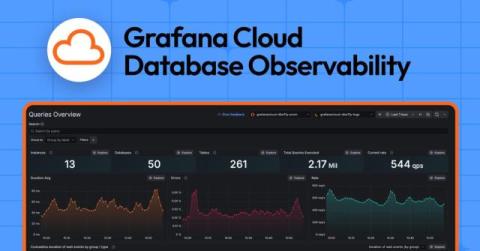
Understand, diagnose, and optimize SQL queries: Introducing Grafana Cloud Database Observability

It’s widely acknowledged that most application performance problems stem not from the application itself, but from the underlying database. Slow or inefficient database queries are often the primary cause of these issues, acting as the biggest driver of application performance incidents. If you’ve been troubleshooting slow API calls or sluggish services, chances are the root cause likely resides within your database layer.

OpenTelemetry Java Agent for Spring Boot: Complete Setup Guide

The OpenTelemetry Java Agent provides zero-code instrumentation for Spring Boot applications through bytecode manipulation. This guide covers setup, configuration, auto-instrumentation capabilities, and production deployment strategies for implementing distributed tracing and observability.

How OpenTelemetry can enhance observability in distributed systems: Practical examples

Observability has become one of the fundamental elements of performance and reliability as modern applications move toward cloud-native architectures, microservices, and multi-cloud. Traditional monitoring techniques often fall short in such dynamic, distributed environments. That’s where OpenTelemetry (OTel) , an open-source observability framework comes into picture.