Operations | Monitoring | ITSM | DevOps | Cloud

Reporting Exceptions to Honeycomb with Frontend Observability

So you've built a client application and you've started sending telemetry. The information sent back by this client is vital to you, and one of the first things you care about is capturing and reporting errors. There are at least two ways to report error details in OpenTelemetry. Web applications generally place exceptions in trace spans as span events, and mobile applications send exceptions as log messages instead.

Save the logs, save the planet: How to make your observability stack greener

If data centres were a country, they’d rank fifth in electricity consumption by 2026. Over the past few years, the resulting carbon footprint of the technology industry has sparked the fast-growing green software movement, led by the Green Software Foundation. How can we continue to innovate software in a way that also minimises its impact on the environment? This has been a fascinating problem I’ve been exploring for a few years now.

AI Observability in 2026: Why the data layer means everything

If there was ever a year for AI observability, it was 2025. Vendors released assistants to cover a variety of use cases. Coralogix released the first agent (distinct from assistants!), Olly, an autonomous, multi-agent observability platform. The direction of travel is clear, but many vendors and users are about to run into some significant problems with their data layer.

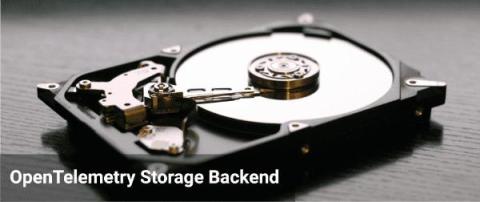
Top OpenTelemetry Backends for Storage & Visualization

OpenTelemetry backends provide storage, analysis, and visualization for telemetry data (traces, metrics, logs). This guide lists available OpenTelemetry-compliant backend options, categorized by use case: APM platforms, storage backends, visualization tools, and distributed tracing systems. For detailed comparison, see OpenTelemetry Backend Comparison.

AI-Powered Observability: From Reactive to Predictive

If there’s one thing clear from our AI-powered observability webinar, it’s that observability has officially graduated from a “nice-to-have” to a business-critical discipline, and AI is helping lead that charge. Our webinar brought together guest speaker Stephen Elliott, Group VP at IDC, and Ranbir Chawla, former SVP of Engineering at RB Global, for an hour of insights that mixed data, experience, and hard-won lessons from the trenches.

Docker Logs Command Reference: tail, follow, since Options

Managing Docker container logs is essential for debugging and monitoring application performance. Tailoring Docker logs allows for real-time insights, quick issue resolution, and optimized performance. This guide focuses on efficient methods for tailing Docker logs, with clear examples and command options to streamline log management.

Observability trends for 2026: Maturity, cost control, and driving business value

The observability landscape has undergone a fundamental transformation over the past several years. In a recent report, The Landscape of Observability in 2026: Balancing Cost and Innovation conducted by Dimensional Research and sponsored by Elastic, over 500 IT decision-makers were surveyed. It revealed that observability has definitively transitioned from an optional capability to a mission-critical business function.

Lightrun 'Runtime Context' Empowers AI Coding Agents to Build Software That Works in the Real World

Safe, Direct Access to Runtime Code Across Staging, Pre-prod and Production via MCP Enables Fundamental Step Forward in Autonomous Software Delivery and Reliability for Enterprises NEW YORK, December 10, 2025 – Lightrun, a leader in software reliability, today launched its new Model Context Protocol (MCP) solution, enabling the industry’s first fully integrated Runtime Context for AI coding agents.

Building a Stronger Defense with Network Observability and Real-Time Monitoring

In today's rapidly evolving digital landscape, the importance of network security and performance has never been more pronounced. Businesses are increasingly relying on their network infrastructure to support a wide array of critical applications, services, and user activities. As cyber threats become more sophisticated and network architectures more complex, maintaining visibility into network performance and security is essential. This is where a network observability platform becomes indispensable.

Using Traces, Metrics, and Logs All in One Place, as Demonstrated by Pipeline Builder

When troubleshooting complex software, it’s important to be able to gain insight via its telemetry quickly and precisely. No one wants to waste time switching between tools or worrying about how to interact with different types of data. At Honeycomb, all your data is available in one place, accessible via our fast query engine. But what does that look like in practice?