Operations | Monitoring | ITSM | DevOps | Cloud

How to deploy a Hello World web app with Elastic Observability on Azure Container Apps

Elastic Observability is the optimal tool to provide visibility into your running web apps. Microsoft Azure Container Apps is a fully managed environment that enables you to run containerized applications on a serverless platform so that your applications scale up and down. This allows you to accomplish the dual objective of serving every customer’s need for availability while meeting your needs to do so as efficiently as possible.
Why Real-Time Debugging Becomes Essential in Platform Engineering

Platform engineering has been one of the hottest keywords in the software community in recent years. As a natural extension of DevOps and the shift-left mentality it fosters, platform engineering is a subfield within software engineering that focuses on building and maintaining tools, workflows, and frameworks that allow developers to build and test their applications efficiently.

Your Guide to Prometheus Observability

Imagine you’re piloting a spaceship through the cosmos, embarking on a thrilling journey to explore the far reaches of the universe. As the captain of this ship, you need a dashboard that displays critical information about your vessel, such as fuel levels, navigation data, and life support systems. This dashboard is your lifeline, providing you with real-time insights about the health and performance of various systems within your ship, so you can quickly make critical decisions.

Troubleshooting Cloud Native Applications at Runtime

Organizations are moving to micro-services and container-based architectures because these modern environments enable speed, efficiency, availability, and the power to innovate and scale more quickly. However, when it comes to troubleshooting distributed cloud native applications, teams face a unique set of challenges due to the dynamic and decentralized nature of these systems.

Do you need better cloud observability - or AI-powered cloud visibility?

Maybe you’re still using monolithic applications, built and refined over many years. You understand that shifting to microservices or containerized architectures is a huge and daunting task. You’re probably grappling with the limitations of legacy systems—maybe they’re slow, tough to update, or can’t scale as you’d like. And you’re likely using more traditional IT monitoring tools or even some cloud observability tools.

Unlocking Observability - Dive into OpenTelemetry's Top Use Cases

OpenTelemetry can be used for generating and collecting telemetry signals like logs, metrics, and traces. The advantage of using OpenTelemetry for observability is that it is open-source and frees you from vendor lock-in. You can use OpenTelemetry for multiple use cases OpenTelemetry is an open-source project which has emerged as the standard for achieving comprehensive observability in modern applications.

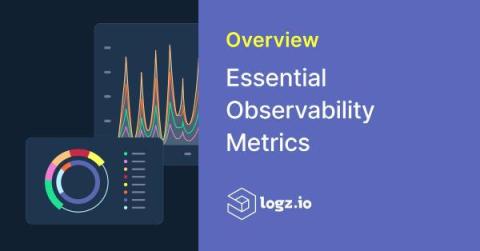
An Overview of the Essential Observability Metrics

Metrics are closely associated with cloud infrastructure monitoring or application performance monitoring – we monitor metrics like infrastructure CPU and request latency to understand how our services are responding to changes in the system, which is a good way to surface new production issues. As many teams transition to observability, collecting metric data isn’t enough.

What Happens to DevOps when the Kubernetes Adrenaline Rush Ends?

Kubernetes has been around for nearly 10 years now. In the past five years, we’ve seen a drastic increase in adoption by engineering teams of all sizes. The promise of standardization of deployments and scaling across different types of applications, from static websites to full-blown microservice solutions, has fueled this sharp increase.

A Vicious Cycle: Data Hidden Behind Lock and Key

Understanding production has historically been reserved for software developers and engineers. After all, those folks are the ones building, maintaining, and fixing everything they deliver into production. However, the value of software doesn't stop the moment it makes it to production. Software systems have users, and there are often teams dedicated to their support.