Operations | Monitoring | ITSM | DevOps | Cloud

How we're using 'dogfooding' to serve up better alerting for Grafana Cloud

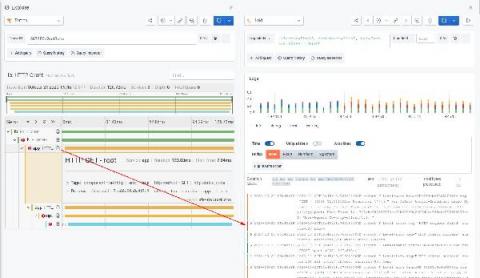
At Grafana Labs, we’re big fans of putting ourselves in the shoes of our customers. So when it comes to building a product, dogfooding is a term we throw around constantly. In short, what it means is that we actually use the products we create throughout their entire life cycle. And I really mean the whole life cycle.

The State of Elixir HTTP Clients

In today’s post, we’ll look at two Elixir HTTP client libraries: Mint and Finch. Finch is built on top of Mint. We’ll see the benefits offered by this abstraction layer. We’ll also talk about some of the existing HTTP client libraries in the ecosystem and discuss some of the things that make Mint and Finch different. Finally, we’ll put together a quick project that makes use of Finch to put all of our learning into action. Let’s jump right in!

Your Data Already Has the Insights. Are You Extracting Them?

The sheer scale of connected devices across physical, virtual, and distributed networks has come to scale that it has become practically impossible for most network administrators to manually keep an eye on each node. Along with the scale, the connectivity between devices within each network has also become denser.

Go-Getting Lazy-Loading

Lazy-loading is the most ironic term in programming. That’s because, instead of eating its third bowl of cereal on the couch, what lazy-loading actually does is make your User Interface more efficient. And efficient UI is important to us at Sentry. We don’t want our customers tapping their feet and pointing to their imaginary watch while waiting for their page to load.

Deploy an Ingress Controller on K3s

Kubernetes provides a powerful networking model for microservices. One of the pillars of this model is that each pod has its own IP address and is directly addressable within the cluster. As a consequence, each Kubernetes cluster usually has a flat virtual network that external hosts can’t reach directly. That means routing traffic from clients outside the cluster to services deployed inside the cluster requires some additional work.

Mitigate Risk With Rolling Deployments

Deploying a new feature to production is a momentous occasion. It's important to ensure that everything goes properly at this stage, as deployments tend to be error-prone when not handled correctly. To examine why this is and how you can avoid it, let's take a look at the different types of deployments available and where some of them fall short.

Why Monitoring Can Be the Lifesaver the Public Sector Needs

One of the business consequences from the pandemic—increased remote working—is causing technology challenges across most industries, including the public sector. Most employees who are now working from home have probably never had to do so before, while those still attending their place of work are mostly people in central government trying to keep the country running, or other critical roles.

Automated Root Cause Analysis & Anomaly Detection in Concert

Everyday IT operators are trying to prevent outages of business-critical applications. When prevention is not possible, IT operators strive to reduce the mean time to repair (MTTR) as much as possible. Improving resolution time can be quite a challenge. But IT operators don't stand alone in this challenge. They can use smart solutions that support Automated Root Cause Analysis and Anomaly Detection.

Swampup Leap: Creating an Inner Source Hub at Siemens

In their presentation at the swampUp 2020 conference, IT service manager Marija Kuester and her team at Siemens AG revealed how they use JFrog Artifactory to deploy and scale their Inner Source Hub service, and meet the challenging needs of their key business stakeholders. In the recorded session, the Siemens team outlined the service architecture with rich insights into the IT service deployment and internal developer adoption.

Evolving Your Security Strategy Toward Self-Securing With Ivanti Neurons

Threat actors move fast. They are agile and will shift tactics as opportunities present themselves. As the COVID-19 pandemic changed how we had to work and manage our users and environments, threat actors also made changes. They adapted to a new opportunity and they did so very quickly. ZScaler released a report in April showing the increase in COVID themed attacks increasing 30,000% between January and March this year.