Operations | Monitoring | ITSM | DevOps | Cloud

Break One Dependency, Not The Whole Cluster

Scoped chaos rules are now in proxymock. A filter query picks the traffic, an effect perturbs it, and every response that gets touched is labelled so you can tell an injected failure from a real one for the rest of the run. Available in v2.5.892 and newer. The short version of why: kill a pod and you learn something real, but you do not learn what your service does when a dependency stays up and starts lying to it.

Application Level Dependency Chaos Testing

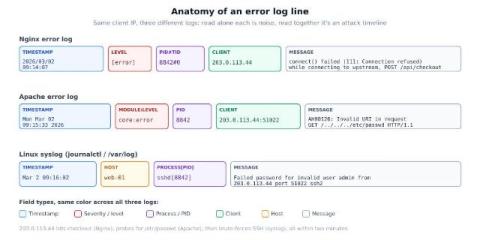
Somewhere in your service is a branch that has never executed. Not a rare one, a never one. It handles a dependency being unavailable: it reads from a cache, it returns a stale value, it marks the response degraded so callers know not to trust it too far. It was written carefully. It was reviewed. Whether it works is an open question, because nothing in the test suite makes that dependency fail, and the dependency does not fail on request.

The 12 Tools I Actually Use to Automate Kubernetes Deployments (2026)

A practitioner's category-by-category breakdown of the best tools for automating Kubernetes deployments in 2026 - Argo CD, Flux CD, Helm, Kustomize, KEDA, Kyverno, OPA Gatekeeper, Karpenter, Cluster Autoscaler, Rancher, Portainer, Terraform and Crossplane - plus which 3 to 5 you actually need, and how a platform like Qovery automates the whole chain from cluster creation to upgrades in under 15 minutes. Romaric founded Qovery to make Kubernetes accessible to every engineering team.

Akamai Cloud Partners with Control Plane to Leverage Universal Cloud Identity

Control Plane is now a technology partner of Akamai Cloud. You can add regions from Akamai Cloud to your Global Virtual Cloud in Control Plane. And by leveraging Control Plane’s Universal Cloud Identity, workloads running on Akamai Cloud regions can still consume any service of AWS, GCP, or Azure with no credentials embedded in the workload.

Back-to-school demand, handled: AI-powered capacity planning in one cloud DCIM

When back-to-school demand shifts overnight, your team can’t afford to chase answers across scattered spreadsheets and tools. You need a clear picture of available capacity, constraints, and priorities—all in one place. Hyperview’s cloud-based DCIM offers AI-powered capacity planning software that puts real-time capacity insights on a single dashboard, so you can act quickly and confidently as seasonal demand ramps up.

Extending autonomous L1 ops with new suppression and runbook capabilities

Earlier this year, I had the chance to meet with one of our airline customers. During the meeting, we discussed how to use agentic technology to automate L1 workflows. As one of the largest global airlines, they have many applications and service teams focused on flight-critical, tier 1 environments. Any downtime can cause costly delays and unhappy customers.

6 Things to Know Before Choosing an SEI Platform in 2026

Choosing a software engineering intelligence platform is one of those decisions that gets more complicated the longer you wait. The category has grown rapidly, and every vendor claims to track the metrics that matter. GitKraken Insights gives you a full-stack view of engineering performance, from DORA metrics to AI tool ROI, in a platform trusted by over 40 million developers. But it isn’t the only option on the market.

Digital Workspace Monitoring Software Comparison for Enterprise IT

As enterprises adopt hybrid work, IT teams face growing challenges in keeping the digital workspace fast and reliable. Employees access business applications through virtual desktops, SaaS platforms, cloud infrastructure, and physical endpoints, all of which contribute to the overall user experience. Monitoring these environments using disconnected native tools often leaves critical visibility gaps. Digital Workspace Monitoring closes those gaps.

Developer Self-Service Pipelines with Harness IDP

Developer self-service pipelines fail most often at the handoff between resource provisioning and production deployment. A service catalog might let developers scaffold a new microservice in seconds, but if they still need to file tickets to wire up CI/CD, provision environments, or update deployment configurations, the value proposition collapses. The friction reappears exactly where velocity matters most: the path from code commit to running production workload.