Operations | Monitoring | ITSM | DevOps | Cloud

Why SCOM needs SquaredUp: Performance monitoring reporting

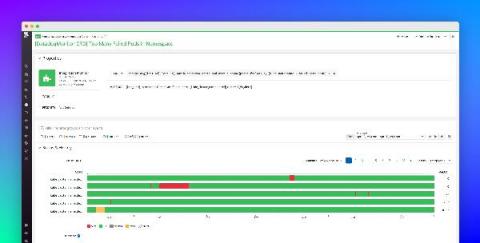
As a SCOM admin, you’re probably heavily involved with alert analysis and performance monitoring. You probably also know then, that while SCOM is a great monitoring tool, it leaves a lot to be desired when it comes to reporting on performance monitoring. I’ve got good news for you. SquaredUp sits on top of SCOM and completely changes the game. How? Why? Read on for a comparison and break down of all the reasons you should do it with SquaredUp.

Provide instant support for employees using Virtual Agent within Microsoft Teams

Employees in an organization expect instant support and turnaround to their issues when they contact the internal helpdesk. To facilitate this, companies invest a significant amount of time and money to build and implement self-service portals. But this makes little or no impact on the self-service adoption numbers. This is because self-service portals are still external to employees. It’s difficult for employees to remember the tool or the access URL to reach out for help.

The Technology Companies Think They Can Live Without (and Why They're Wrong)

When the value is obvious, most companies are willing to invest in tools to help employees get their job done better. But over the course of my career, I’ve noticed a few blind spots companies can’t seem to remember when writing out their tech team grocery list. These include things obvious to many, like training, antivirus for all devices, and comprehensive content management; or the more subtle ones like password managers or (yes) monitoring.

8 Tips For Server Monitoring Alerts

The last thing you want to happen is for your server to crash, so understanding alerts and knowing the next step to resolve any issues is key. As one of today’s leading network and server monitoring software, Pandora FMS wants to ensure that when it comes to your servers, you’ll have a smooth landing every time! That’s why below we’ve gathered some of the best practices for dealing with server alerts.

How we improved our Lighthouse score from 70 to 96.

We recently optimized the hell out of our Lighthouse score, and one of our landing pages went from a low 70s score to a cool 96 and above score. Below I describe what started as a quick lunch break peek into the Google Search Console. I recognized that our 'Pingdom alternative' landing page ranks surprisingly well with nearly no investment. BUT the competition was ranking even better. So, why? Common knowledge is that Google-Search is using hundreds of ranking factors.

How to deploy the Elastic Stack on Red Hat OpenShift with ECK

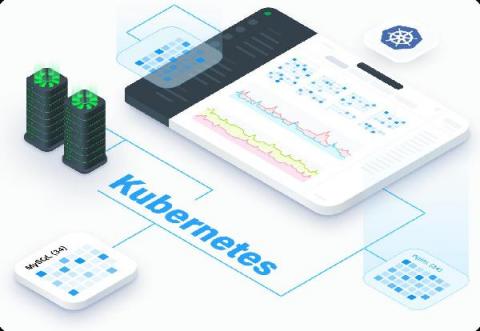
Managing hundreds or thousands of containers has quickly become the standard for many organizations. With infrastructures growing more complex, we want every user to find value with Elastic (regardless of where or how they operate). We created Elastic Cloud on Kubernetes (ECK) — the official Operator — to simplify setup, upgrades, scaling, and more for running Elasticsearch and Kibana on Kubernetes.

AWS Step Functions Use Cases

As you probably already know, Step Functions is a serverless Workflow Service provided by Amazon Web Services (AWS). There’s a lot to discuss about this service, and you’ll find plenty of vital information in our AWS Step Functions: The Ultimate Guide as well as in our series of articles that’ll dive deep into various aspects regarding this AWS service.

Predictive Analytics Meets IT Operations

Using data to predict and prevent IT outages and issues is a growing best practice—especially as advances in monitoring software have made it easier to deliver analytics in a timely manner. IT predictive analytics, once known as IT operations analytics (ITOA), is still nascent in many organizations, but it’s far more streamlined than it used to be when one needed to export data sets to specialized analytics tools such as Tableau or Microsoft PowerBI.

3 Key Trends From the 2020 Network Vendor Diversity Report

In the inaugural Network Vendor Diversity report, Auvik discovered high diversity in the network devices IT teams and MSPs were managing. In 2019, the data showed complexity continuing to rise as all categories became increasingly fragmented. In the 2020 edition, we look at the same four categories of managed network devices—access points, switches, routers, and firewalls—deployed across a sample of 30,000 networks, and compared the data to both 2018 and 2019.