Operations | Monitoring | ITSM | DevOps | Cloud

Alloy Software Extends Mobile Offering with Change Management

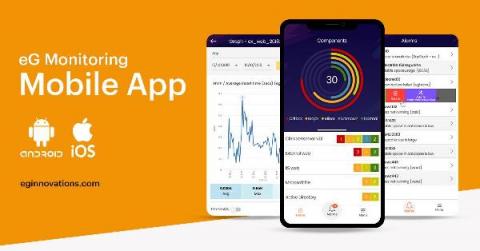
Bloomfield, NJ – February 10th, 2021 — Alloy Software, a leading provider of IT Service Management and Asset Management solutions, announced today a new version of the Alloy Navigator app on Android and iPhone. The mobile app update is available now and includes several new features to support change management and approval workflows.

Observability vs. Monitoring - What's the Difference?

Some of the earliest memories of my career involve getting spammed by hundreds of emails from monitoring systems. After managing to find an issue, I’d scroll through endless logs trying to find obscure bugs that are impossible to recreate. I’m sure you’ve been there. I’ve spent many hours, days, and even weeks pressing “Page Down” on my keyboard trying to find a clue pointing me toward the root cause. I’m here to tell you: there’s a better way.

Initial Considerations for an ITSM Evaluation

The start of a new year brings the familiar sentiments of “New Year, New Me!” or in 2021’s case, “New Year, New Perspective.” Ushering in a new year provides an outlet for personal reflection but it’s also a time for organizations to review and establish their business objectives. As the new year kicks off, perhaps one of your organizational goals is to invest in a new IT Service Management (ITSM) solution.

Enterprise DevOps: 5 Keys to Success with DevOps at Scale

After getting a taste of DevOps’ benefits, enterprises naturally seek to widen its adoption. However, the tooling and processes that work for small-scale use cases often fall short when teams try to scale DevOps efforts. You must support all your different teams, toolsets, applications, processes, workflows, release cycles and pipelines — both legacy and cloud native.

New Ops Guide: Best Practices for On-Call Teams

The always-on, always-available expectations of digital services have increased the requirements of technical teams to be ready and provide response around the clock. For teams new to this concept, introducing on-call can be stressful and complex. As part of PagerDuty’s main platform, on-call management is key to our business, but the non-technical aspects are also important for teams to consider.

Elastic Stack alerting now generally available

We are thrilled to announce the general availability of alerting in the Elastic Stack with the release of 7.11. With deep integrations throughout our products and solutions, a laser focus on distinguishing signal from noise, and tie-ins to the third-party platforms you depend on like email, PagerDuty, ServiceNow, and Microsoft Teams, building, using, and acting on alerts in Elastic has never been more powerful.

Getting started with runtime fields, Elastic's implementation of schema on read

Historically, Elasticsearch has relied on a schema on write approach to make searching data fast. We are now adding schema on read capabilities to Elasticsearch so that users have the flexibility to alter a document's schema after ingest and also generate fields that exist only as part of the search query. Together, schema on read and schema on write provides users with the choice to balance performance and flexibility based on their needs.

Runtime fields: Schema on read for Elastic

In 7.11, we’re excited to announce support for schema on read in the Elastic Stack. We now offer the best of both worlds on a single platform — the performance and scale of the existing schema on write mechanism that our users love and depend on, coupled with a new level of flexibility for defining and executing queries with schema on read. We call our implementation of schema on read runtime fields.

Streamlining IT Operations with BigPanda and ServiceNow

Does the following sound familiar? You have a complex, hybrid and dynamic IT stack – with your cloud infrastructure changing by the minute and your container infrastructure changing by the second. Your monitoring and observability tools provide excellent visibility into your infrastructure, your applications and your services, but the dynamic environment in which they operate causes them to generate large volumes of heterogeneous machine data, with thousands of alerts a minute.