Laying the Foundation for Robust Data Governance
Data governance is a set of responsibilities and processes used to manage your data assets to meet your business needs, security requirements, industry regulations, and data integrity.


Ransomware is a strain of malware that blocks users (or a company) from accessing their personal data or apps on infected iOS, iPadOS, and Android mobile devices, macOS laptops, Windows personal computers and servers, and Linux servers. Then the exploit demands cryptocurrency as payment to unblock the locked or encrypted data and apps. This form of cyber extortion has been increasing in frequency and ferocity over the past several years.
A few days ago, we hosted a very well received webinar presented by Barry Schiffer (CTP) from eG’s Benelux team and George Spiers, CTP and real-world Citrix Administrator. They covered key questions and workflows, such as: A colleague and I were answering questions during the live webinar, and we received a lot of questions. One of the best things about participating in these webinars is the high quality and breadth of questions that we receive from the attendees.
We have been warning for a long time: Pandora FMS will control the world. We have given time to world governments to prepare, to North American villagers to prepare their bunker, for sects to draw their banners with “THE END IS NEAR”. And it is, it is indeed. Today, in our blog we reveal the secret plans of this company to overthrow the institutions and rule the world, then you will say that we did not warn you.
Elastic Security's newest features define the potential of XDR for cybersecurity teams. Our single platform brings together SIEM and endpoint security, allowing users to ingest and retain large volumes of data from diverse sources, store and search data for longer, and augment threat hunting with detections and machine learning. Security vendors are using the term “XDR” with increasing frequency, applying varied definitions to suit their respective technologies.
Elasticsearch 7.14 introduces match_only_text, a new field type that can be used as a drop-in replacement for the text field type in logging use cases with a much lower disk footprint, leading to lower costs. Elasticsearch is attractive for log analysis thanks to its ability to index log messages. Want to count how many log messages contain access denied in the last 24 hours?
How close can CSPs come to realizing the zero touch network vision, and what are the best next steps for getting there? To discuss this question Anodot brought together a panel of experts, including Kim Larsen, CTIO of T-Mobile Netherlands; Ira Cohen, co-founder of Anodot and the company’s chief data scientist; Fernando Elizalde, analyst at GSMA Intelligence; and moderator Justin Springham.
For many CSPs, increasingly complex networks and immature technological solutions result in a typically long time to the detection and resolution of incidents that impact the customer experience, the brand’s reputation, and the bottom line. With RAN, Mobile and IP core, transport and applications and dozens of other integrated components, the network is one of the most complex areas to monitor.
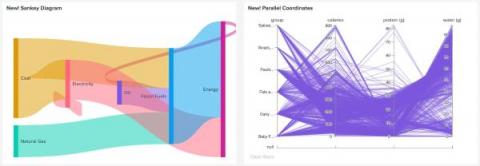
Here on the Splunk Dashboards team we take your feedback seriously. While we can't get to every request right away, we do add most requests to the backlog so we can roll your feedback into the product. In this blog post, we'll cover new features and improvements to Dashboard Studio in Splunk Cloud Platform 8.2.2106 based on feedback from you, our customers.