Software development teams face a large and growing number of obstacles: shifting design requirements, organizational blockers, tight deadlines, complicated tech stacks and software supply chains. One emerging challenge that developers and IT leaders face is the need to stay compliant with regulations and control frameworks that stipulate comprehensive data security, incident response, and monitoring and reporting requirements.
Recently we caught up with the Sumo Logic team to discuss network visibility and optimizing application stack views. We took a look at their API and found that it would be easiest to use the HTTP Ingest method to send in our metric data.
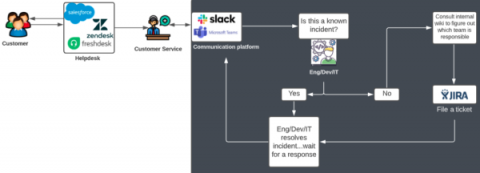
“Customer service software has evolved so much these past ten years, but they all seem to be solving the same problems!” This was a statement made by a Customer Service leader in a recent brainstorming conversation around decreasing overall Response Times and Resolution Times.
Written by Nick Cavalancia, Technical Evangelist, Microsoft MVP, & CEO of Conversational Geek In a world of Managed IT Service Providers that all offer some form of services around Microsoft 365, there’s a compelling case to be made for your business to be centering in on Microsoft Teams.
It’s been just over a month since cybersecurity conferences returned in a big way with the comeback of RSA Conference after last year’s hiatus. A lot happened between 2020 and 2022 in the world, our lives, and cybersecurity, including the birth of a little no-code security automation start-up named Torq. RSAC 2022 was a great place to catch up on these changes and look forward to emerging trends and security needs.
Load balancers and content delivery networks (CDNs) are critical tools for delivering modern, cloud-native applications. They play essential roles in ensuring the smooth flow of data between applications and end-users. If you don’t have both a load balancer and a CDN in place, you’re probably in a poor position to guarantee the uptime of your application across a wide geographic area. That does not mean, however, that load balancers and CDNs do the same thing.
DevOps has never been more popular than it is today. Since first popularized nearly 15 years ago by Patrick Debois and Gene Kim, DevOps has become the standard approach for managing IT. In this blog post, we’ll look at key trends and data that paint a picture of today’s State of DevOps. You can learn more about the history and fundamentals of the topic in our article What is DevOps and why is it important?.