Operations | Monitoring | ITSM | DevOps | Cloud

From AI Prototype to Production: The Technical Architecture Enterprises Need

Building a generative model that spits out flawless answers in a controlled notebook feels like a massive win for any engineering team. But watching that exact same model crash the second it hits real, concurrent user traffic? That is a frustrating reality check. The gap between a slick proof of concept and a mission-critical deployment is surprisingly wide, and it almost always comes down to the underlying infrastructure. If your systems cannot handle the dynamic load, the smartest algorithm in the world will not save you.


The Operations Bottleneck That Often Goes Unmeasured

Walk through a well managed manufacturing plant and there is usually no shortage of operational data. Teams monitor machine uptime, cycle times, scrap rates and throughput, then use that information to identify constraints and improve performance. However, some processes that influence overall capacity receive much less attention. In particular, activities that depend on people reading, counting and extracting information from documents are not always measured as operational processes.

SaaS Sprawl Is Becoming an IT Problem: Here's How to Bring It Under Control

For most organizations, SaaS sprawl does not begin with a bad technology decision. It starts with a useful tool. Marketing needs a new analytics platform. Sales adopts prospecting software. HR adds an applicant tracking system. Engineering signs up for another monitoring service. Someone discovers an AI tool that saves several hours a week and puts it on a company card. Each purchase makes sense on its own.

R&D Tax Relief, Cash Flow and Forecasting: The Finance Priorities for Growing Tech Companies

Technology businesses often operate in an environment where significant expenditure comes before predictable revenue. Product development, software engineering, specialist staff and infrastructure can require substantial investment while the business is still establishing its market position.

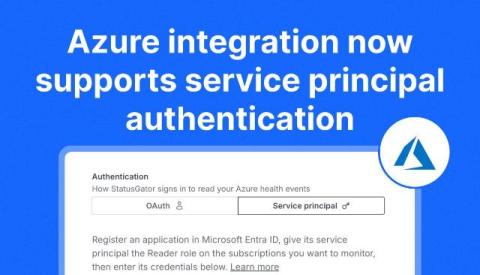
Azure integration now supports service principal authentication

We’ve released some improvements to our Azure status integration. StatusGator can now read your Azure Resource Health events via a service principal. Previously the only supported authentication mechanism was OAuth. Both pull the same data and produce the same alerts – the difference is who the connection belongs to, and what happens to it over time.

The gap between individual AI productivity and team performance

As a product manager at Upsun with a computer engineering background, Kateryna Dvornichenko had spent months researching competing tools in the agentic development space, running tests, comparing features, and building a picture of where the market was heading. She realized the tools were impressive, but something kept standing out. "Collaboration was not the strong point of any of them," she says. "Everyone stays on their own machine with their own setup.".

Repo rightsizing: audit every model call in a repo you already shipped

Repo rightsizing is a single-pass audit of every real model call in a codebase you already shipped: SDK invocations, sub-agent dispatch sites, and agent frontmatter pins. Each call site is scored on the job it actually does, and the result commits as one blueprint file you can diff next quarter. It replaces one-skill-at-a-time reviews, which miss files where a single model key covers two different jobs.

AI usage tracking: Monitor spend by team, feature & model

AI usage tracking means measuring who and what consumes AI across your company, by team, feature, and model, then converting the usage into spend and cost per unit of work. Provider consoles stop at totals per API key. Tracking puts names on those totals: which team, which product, which model, and whether any of it was worth the money. In May 2026, CNBC reported that “almost every Fortune 500 is tracking overall AI usage,” quoting ModelOp CTO Jim Olsen. The same reporting carried his warning.