Operations | Monitoring | ITSM | DevOps | Cloud

PD Automation Runner: Automation That Finally Reaches Your On-Prem Stack

This blog post is part of PagerDuty’s ongoing series on how we’re helping customers navigate their journey towards autonomous operations. Read on to learn about how PD Automation Runner, now in Early Access, builds towards this vision. Your on-call engineer gets paged for a critical alert on a self-hosted Kubernetes cluster. If this were a cloud-hosted service, Workflow Actions and the SRE Agent would already be working the problem: pulling logs, checking health, surfacing a fix.
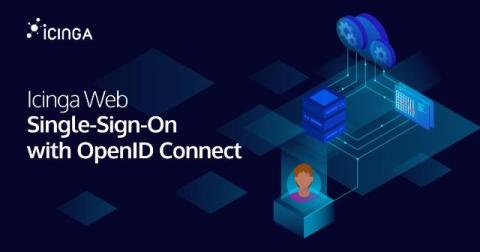

Icinga Web SSO walkthrough

The ability to log into all corporate applications with one username and password is pretty convenient, even compared to a password manager. As a benefit, the IT department can centrally enforce one desired two-factor auth mechanism. Now we, Icinga, also provide a so-called OpenID Connect integration for single sign-on. By the end of this text you’ll know how to connect your Icinga Web instance to the ID provider of your choice.

6 Signs a Dedicated Log Tool Fits Better Than a Full Observability Platform

Most growing teams eventually consolidate onto a full observability platform, and for teams correlating logs, metrics, and traces across a complex system, that’s often the right call. But a dedicated log tool still wins for a specific set of teams: ones that need to move fast, keep costs simple, and get real answers from logs without carrying the weight of a platform they don’t fully need yet. Here’s when that’s you.

ITSM Maturity Model: The 5 Levels And Where AI Fits at Each One

An ITSM maturity model is a practical framework for measuring where your Service Management stands across people, processes, technology, and governance, then turning that baseline into a prioritized improvement plan. Most models describe five levels — from ad hoc to optimized — with clear characteristics and outcomes at each stage. This guide explains the levels, how to assess your current state, how to map capabilities to ITIL 4 practices, and actionable steps to get started.

Next-Generation Apple CarPlay: iOS 26's Real Limit

iOS 26 turned CarPlay widgets from a 2022 promise into a shipping surface. What you actually see, though, is decided by your car - not your iPhone. Most head units render one or two widget stacks; three arrived only on the largest screens with iOS 26.2 in December 2025. That one constraint drives every decision below. iOS 26 puts a widget stack next to the map - but how many stacks you get is set by the head unit, not the phone.

How to Break Into Network Engineering With Network+ and No Prior Experience

Breaking into network engineering can feel difficult when every job posting seems to ask for experience you do not have yet. But experience does not always have to start with a full-time networking role. Certifications, hands-on labs, personal projects, and entry-level IT work can all help you build the foundation employers expect.

When login systems become an ops problem

SSO usually enters a company as a convenience project. People are tired of juggling passwords, new employees need access faster, and security wants fewer loose credentials floating around the business. At first, that sounds like a clean IT improvement. Then the company grows, tools multiply, teams work across more environments, and login becomes part of the operating layer that keeps the whole business moving.

CRM API Rate Limits: What Developers Need to Know Before They Build

Every CRM integration starts the same way. You write some code, test it against a sandbox account with a few hundred contacts, and everything works beautifully. Then you push to production, where the account has 50,000 records and three other integrations pulling data at the same time, and suddenly you're drowning in 429 errors.

The Renewal Conversations Nobody Owns Until It's Too Late

Every recurring revenue business has a sales team that closes deals and a delivery team that does the work. But when it comes to the actual renewal, there's this weird dead zone where nobody takes responsibility. Someone eventually pulls a report, notices a contract is 60 days from expiry, and sends a panicked email to a customer they haven't spoken to in months.

Why AI Adoption Fails Without the Data Work First

Most enterprise AI projects don't fail because the model wasn't good enough. They fail because the data underneath was a mess before anyone switched anything on. Duplicated contacts, contradictory fields, records that haven't been touched in three years but are still floating around in production tables. The AI doesn't know any of that context. It just reads what's there and runs with it.