Operations | Monitoring | ITSM | DevOps | Cloud

Running a Green CI Pipeline Isn't the Hard Part Anymore

AI writes code faster, but CI still repeats costly work. See how Harness CI cuts unnecessary tests, recompilation and dependency downloads. Six months ago, your team adopted an AI coding assistant. Pull requests doubled. Generated code started landing in branches faster than reviewers could read it. The CI pipeline kept up for about three weeks. Now the queue backs up by mid-morning. Builds take 38 minutes. 4,000 tests run on every commit when 60 are relevant.
Devart ODBC Drivers update brings SQL Server 2025, MySQL 9.7, and new Snowflake authentication methods

The latest release of Devart ODBC Drivers is here, bringing support for Microsoft SQL Server 2025, MySQL 9.7.x, and NexusDB 4.75.20, along with new authentication methods, advanced data protection features, and improved compatibility with development tools and operating systems.

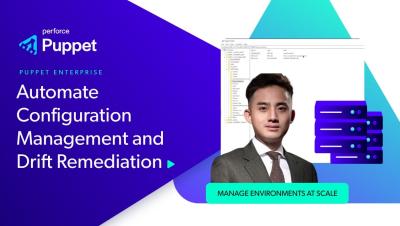
Automate Configuration Management and Drift Remediation at Scale

Learn how Puppet Enterprise by Perforce automates configuration management, enforces desired state, and enables automatic drift remediation across Windows servers at scale. In this demo, Matthew, Associate Sales Engineer at Puppet, shows how to use Puppet Enterprise to deploy and manage Windows registry configurations across multiple servers from a single console. See how infrastructure as code helps eliminate manual configuration tasks, reduce human error, and maintain consistent system configurations across your environment.

Splunk Observability Cloud and Ansible Automation Platform - How to Remediate Alerts with Ansible

Close the AIOps loop with Splunk Observability Cloud and Red Hat Ansible Automation Platform. Explore how OpenTelemetry and Event-Driven Ansible turn alerts into automated fixes, reducing manual firefighting and speeding up incident resolution.

Scout Trails Is in Beta: See What Your AI Coding Agents Are Doing

session start tool call tool call cost outcome AI coding agents have quietly become part of most engineering teams. They open files, run commands, call tools, and push changes, often for hours at a time. Yet when you want to know what an agent actually did, the answer usually lives in one developer’s terminal history, and it disappears when that session closes.

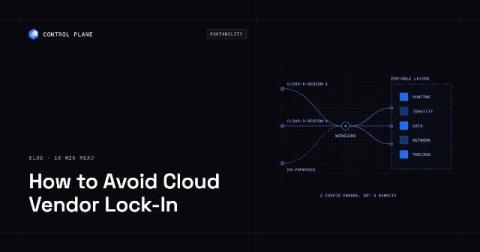
How to Avoid Cloud Vendor Lock-In: A Practical Guide for 2026

You avoid cloud vendor lock-in by keeping the parts that are expensive to move portable: the compute runtime, identity, data, networking, and deployment tooling. You accept proprietary services only where their value clearly exceeds the exit cost, so that leaving or adding a provider is a configuration change rather than a rewrite.