Operations | Monitoring | ITSM | DevOps | Cloud

The latest News and Information on Monitoring for Websites, Applications, APIs, Infrastructure, and other technologies.

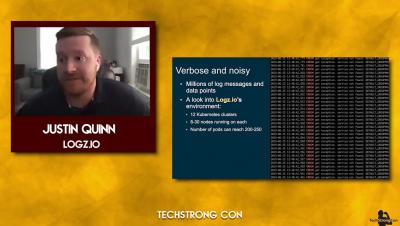
Designing an Opensource Observability Stack for Distributed Environments - Tech Strong Conf.

Observability teams today are facing increasing challenges in achieving visibility into the systems they monitor. Kubernetes adds significant complexity to achieving this goal. Open source provides powerful options and comes with serious advantages in cost, agility, and speed. Join Logz.io co-founder Asaf Yigal to learn how you can gain observability into Kubernetes projects with open source tools.
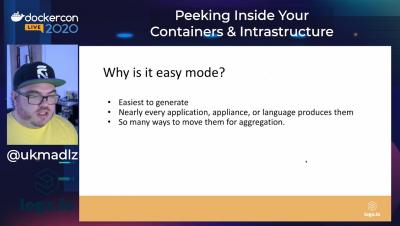
Peaking into your container and infrastructure

Containers get shipped by the thousand, but how do you keep track of the health and status of all those individual compute units? You can do it following the principles behind observability, you can see what’s happening with the infrastructure and the applications using open source tools. In this talk, we’ll describe how easy it is to implement the OSS tools required to get full observability and how that’ll improve your operations and your development cycles.

Site24x7 - The Full-stack Performance Monitoring Solution for DevOps and IT Operations.

Site24x7 offers unified cloud monitoring for DevOps and IT operations. Monitor the experience of real users accessing websites and applications from desktop and mobile devices. In-depth monitoring capabilities enable DevOps teams to monitor and troubleshoot applications, servers and network infrastructure including private and public clouds. End user experience monitoring is done from 90+ locations across the world and various wireless carriers.

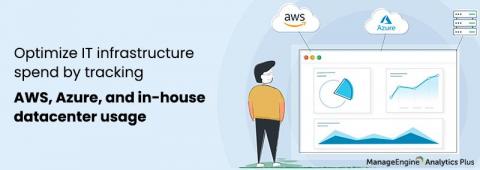
Infrastructure dashboards: Declutter your monitoring data and ensure you're not overspending

The task of monitoring and managing an entire network, including all the servers and applications that run on it, is by no means easy. With so many components of varying complexity, the volume of performance data coming at you can be overwhelming. This information overload increases the chances of missing data that could help discover performance inefficiencies.

How to Use Monitoring Tools to Improve Root Cause Analysis

As an IT manager you would have often heard from your line manager or user ask “Let’s drill down to find the root cause.”? As dreaded a question as it may seem, it is really the most important answer to understand IT outages. IT infrastructure availability is highly dependent on isolating problems, so the deciding variable in a problem can be fixed without putting the entire system at a halt. This is where RCA can be of tremendous help.

Better Python Decorators with Wrapt

Our instrumentation uses built-in extension mechanisms where possible, such as Django’s database instrumentation. But often libraries have no such mechanisms, so we resort to wrapping third party libraries’ functions with our own decorators. For example, we instrument jinja2 ’s Template.render() function with a decorator to measure template rendering time. We value the correctness of our instrumentation a lot so that we do not affect our users’ applications.

Introduction to Site Reliability Automation, Enabled by AIOps from Broadcom

To support digital transformation, organizations are increasingly looking to site reliability engineering, or SRE, approaches to managing complex infrastructures and handling the pace of change induced by DevOps. When issues occur, it’s important to have an integrated toolset that can determine the root cause and apply remediation. In addition, the solution should understand the results of the remediation action, increasing the confidence level in applying the right actions to other similar issues. All of this results in site reliability automation - enhancing infrastructure monitoring with intelligent recommendations and auto-remediation capabilities to help SREs create more resilient production environments. To learn more, go to broadcom.com/aiops

What is a Network Audit and How can Uptime.com Help?

Scaling sort of sneaks up on you, doesn’t it? One day, you’re carefree, the next you start to notice something is off… Maybe it’s the crashing, or the frequent dips in performance. Could it be the new hire? It’s not DNS. Is it DNS? Scaling is a natural part of the business process, and your infrastructure will start to change completely as your userbase doubles and triples.