The latest News and Information on Monitoring for Websites, Applications, APIs, Infrastructure, and other technologies.
As Kubernetes monitoring continues to standardize on Prometheus as a form factor, more and more developers are becoming familiar with Prometheus’ built-in query language, PromQL. Besides being bundled with Prometheus, PromQL is popular for being a simple yet expressive language for querying time series data. It’s been fully adopted by the community, with lots of great query repositories, sample playbooks, and trainings for PromQL available online.
With so many apps to choose from, mobile users no longer have much patience for apps that don’t work well. This isn’t just about bugs and crashes; users also think about how fast the app works and how much battery it uses. But have you ever thought about what would happen to the business if your live applications running on the client’s systems went down or didn’t work as expected?
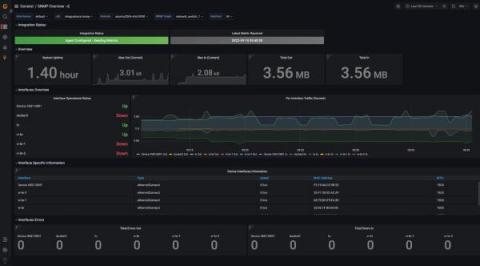
Simple Network Management Protocol (SNMP) is an internet protocol that is used to collect information about network devices and manage them. Most of the modern devices connected to a network support SNMP, such as routers, switches, servers, printers, and more. There are three different versions of SNMP (v1, v2, and v3). It most commonly operates on UDP ports 161 and 162. The most common versions being used are v1 and v2. The data can be collected from a network device through SNMP via polling.
Another month has come to a close, so I’m back again to take you through what’s new and noteworthy from the month of September. If you missed last month’s blog, this will be a monthly recurring series to keep you posted with the latest and greatest at Honeycomb. There’s a ton to cover, so I’ll dispense with the preamble and dive right in.
When we set out to trace applications running outside of AWS Lambda, there was little doubt in our minds that building on top OpenTelemetry was by far the best course of action. There are many reasons for this, but chiefly, it is a question of coverage. At its most fundamental level, achieving coverage requires as-wide-as-possible support for technologies, and interoperability among instrumentations.
Check our September 2022 health report on the top most popular cloud providers. We analyze the health of the cloud providers based on the number of outages and problems during the month. The source of the data is made available by the cloud providers themselves via their status page. We normalize it and use it to generate the report.