The latest News and Information on Monitoring for Websites, Applications, APIs, Infrastructure, and other technologies.
In the last few years, fintech enterprises have disrupted the financial services and banking industry by taking everything computing technology offers – from machine learning to blockchain – and turning it up a notch. Traditional financial institutions must now compete with challenger banks offering electronic payment alternatives, peer-to-peer lending, and investment apps.
Too often, when organizations migrate workloads to the cloud or build new cloud-native applications, they don’t really think about storage. The cloud provider takes care of all that, right? Well, yes and no. There are cost implications to cloud storage that many don’t adequately anticipate—until they get the bill, that is.
For a recent feature, I had to download a batch of files from an internal website written in ASP.NET Core. Zipping the files before downloading them, turned out as a great way of easily implementing multi-file download. .NET offers all of the needed features and in this post, I'll show you how to implement it. To get started, I'll create a new ASP.NET Core website: I'm picking the MVC template, but none of the zip-related code is specific to MVC.
A private status page is a website or communication platform that provides status updates and notifications to a specific group of people rather than the general public. Private status pages are often used by companies to keep their employees, users, or partners informed about the status of their products, services, infrastructure, vendors, and providers.
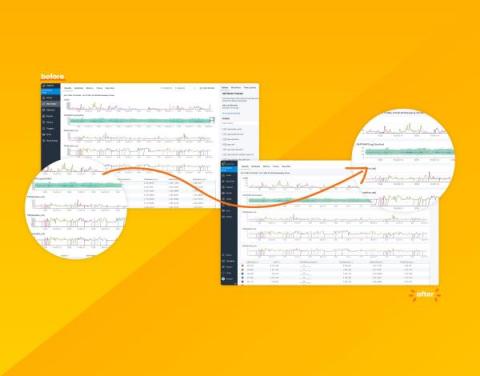
Data visualizations take complex information and present it in a clean and easy-to-understand visual. Done right, they can allow quick insight through easy pattern and outlier recognition. Done wrong, it can confuse, obfuscate, and lead to wrong conclusions. Yikes! Over the past few months, we've been hard at work modernizing Honeycomb’s data visualizations to address consistency issues, confusing displays, access to settings, and to improve their overall look and feel.
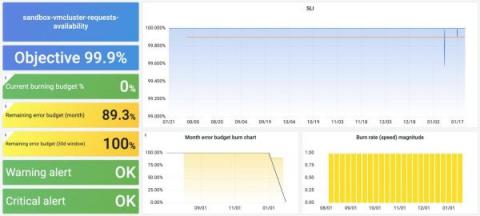
Recording rules is a clever concept introduced by Prometheus for storing results of query expressions in a form of a new time series. It is similar to materialized view and helps to speed up queries by using data pre-computed in advance instead of doing all the hard work on query time. Like materialized views, recording rules are extremely useful when user knows exactly what needs to be pre-computed. For example, a complex panel on Grafana dashboard or SLO objective.
Every client we meet has been using multiple tools to satisfy their observability needs. We rarely find a greenfield opportunity. As their journey progresses, they have pointed out when the time is right to add ChaosSearch into the fold. There isn't just one symptom; it's usually a combination of things, including high log data volume, unpredictable costs, and ineffective results, to name a few. By the time we talk to clients in this state, the pain and frustration are incredibly high. We created a five-minute video to demonstrate how clients find themselves in this predicament.