Operations | Monitoring | ITSM | DevOps | Cloud

The latest News and Information on DevOps, CI/CD, Automation and related technologies.

5 Reasons Why GitKraken Client is the Ultimate Tool for GitHub Users

GitHub is the industry standard for version control and collaboration. It’s reliable, it’s robust, and it gets the job done. But here’s the thing: industry standard doesn’t automatically translate to gold standard. So how do today’s top devs elevate their GitHub experience from good to great? They pair it with GitKraken Client. Below are the top five reasons why GitKraken Client is a game-changer for GitHub users.

Experience Omni Dev with CodeZero with Narayan Sainaney - Navigate Europe 23

Join Narayan Sainaney, co-founder and CTO of Codezero, as he unveils the groundbreaking concept of Omni-development on Kubernetes. Explore the challenges developers face with microservices and how Codezero's solution streamlines the development process, reducing complexity and enhancing productivity. Watch as Narayan demonstrates the practical application of this novel approach and discusses its impact on the future of software development.

The Benefits of Using DCIM Software for Data Center Cable Management

One of the primary benefits of DCIM software is the enhanced visibility it provides into the physical infrastructure of a data center. This software creates detailed, accurate, and up-to-date maps of all the cabling and connections within the facility. Such documentation is invaluable for troubleshooting, as it enables IT staff to quickly identify and resolve issues related to cable connections.

How to Monitor Your RabbitMQ Performance Using Telegraf

Monitoring RabbitMQ is essential for maintaining the health, performance, and reliability of your messaging infrastructure. It empowers you to take proactive measures, prevent downtime, and deliver a seamless messaging experience for your applications and users. Monitoring helps you keep an eye on the performance metrics of RabbitMQ, such as message rates, queue lengths, and resource utilization.

Building a GPT-style Assistant for historical incident analysis

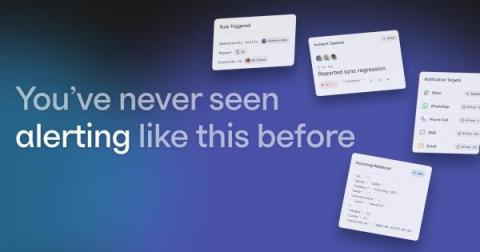
Like most things, our AI Assistant started out as an idea. One of our data scientists, Ed, was working with our customers to improve our existing insights. But the most common theme that kept surfacing was the wide-range of use cases that our customers wanted to use insights for. Using this user feedback as our inspiration, we came up with the idea of a natural language assistant that you can use to explore your incident data.

Lessons learned from building our first AI product

Since the advent of ChatGPT, companies have been racing to build AI features into their product. Previously, if you wanted AI features you needed to hire a team of specialists to build machine learning models in-house. But now that OpenAI’s models are an API call away, the investment required to build shiny AI has never been lower. We were one of those companies. Here’s our journey to building our first AI feature, and some practical advice if you’ll be doing the same.

Does Every Incident Need a Retrospective? Here's What the Experts Have to Say

Every quarter, we host a roundtable discussion centered around the challenges encountered by incident responders at the world’s leading organizations. These discussions are lightly facilitated and vendor-agnostic, with a carefully curated group of experts. Everyone brings their own unique perspective and experience to the group as we dive deep into the real-world challenges incident responders are facing today.